How to Monetize Authority Without Sacrificing Credibility in 2026


Published on March 17, 2026
Published on Wealthy Affiliate — a platform for building real online businesses with modern training and AI.

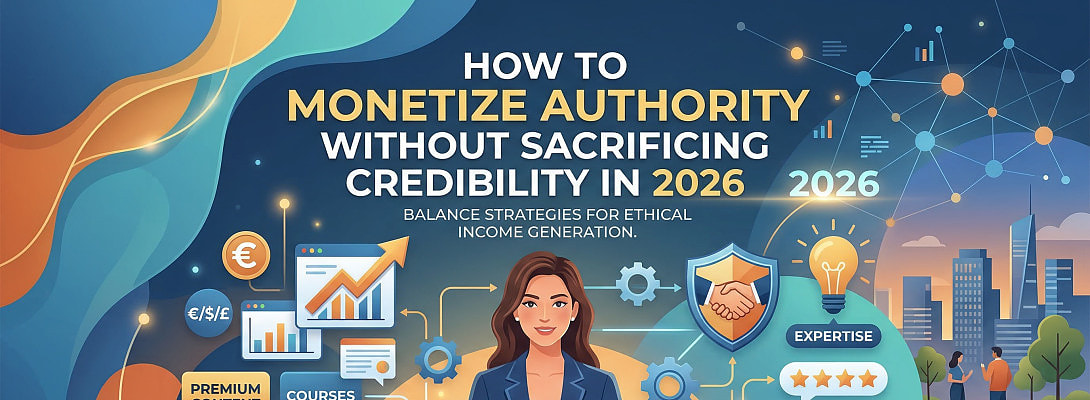
If you’ve spent time building trust, growing an audience, and positioning yourself as an expert, the next logical step is monetization. But here’s where many people get it wrong — they chase revenue in ways that quietly erode the very credibility that made them valuable in the first place. Monetizing authority in 2026 isn’t just about making money; it’s about doing it in a way that preserves trust, strengthens your reputation, and deepens audience loyalty.
The data supports this shift. According to Edelman’s Trust Barometer, 81% of consumers say trust is a deciding factor in whether they engage with a brand, and 67% say they will stop supporting creators who promote products that feel inauthentic. At the same time, HubSpot reports that trust-driven content strategies generate up to 2.9X higher long-term revenue compared to aggressive, sales-heavy approaches. This shows that credibility isn’t separate from monetization — it is the foundation of sustainable income.
The rise of AI has made this even more critical. With AI-generated content flooding the internet, audiences are becoming more selective about who they trust. Google’s evolving systems prioritize experience, expertise, authority, and trust (E-E-A-T), meaning content that feels manipulative or overly commercial is less likely to rank or retain attention. According to Search Engine Journal, content that maintains authenticity and provides real value sees 20% to 35% higher retention rates compared to content perceived as promotional.
Why Credibility Is the Real Currency
Attention is easy to get. Trust is not. And in 2026, credibility has become one of the most valuable assets you can build online.
Research from Nielsen shows that 92% of people trust recommendations from individuals over brands, while content that feels overly promotional reduces trust by up to 40%. This creates a clear tension: the more aggressively you monetize, the higher the risk of losing credibility — and once credibility drops, engagement and revenue tend to follow.
But here’s the key insight: monetization doesn’t destroy trust — misaligned monetization does. When your offers align with your audience’s needs and your established authority, monetization can actually increase trust. A study by Harvard Business Review found that when experts recommend solutions that genuinely solve audience problems, perceived authority increases by over 25%, not decreases.
This means the goal isn’t to avoid monetization. It’s to structure it in a way that reinforces your positioning instead of weakening it.
Authority Monetization Strategies That Preserve Trust
Before diving into specific methods, it’s important to understand what effective authority monetization strategies look like in practice. These are not quick-win tactics or aggressive sales funnels. They are structured approaches designed to align value, audience need, and revenue generation in a way that feels natural, ethical, and sustainable.
Data shows that creators who prioritize value-first monetization see stronger long-term results. For example, ConvertKit reports that creators who build trust before selling achieve 30% to 50% higher conversion rates and significantly lower churn. Similarly, Substack found that audiences are 2X more likely to pay for content when they perceive the creator as authentic and consistent.
In essence, monetizing authority without sacrificing credibility comes down to one principle: earn trust continuously, even while you sell. With that in mind, let’s break down the most effective strategies.
Step 1: Align Monetization With Audience Needs
The fastest way to lose credibility is to promote something your audience doesn’t need. The strongest monetization strategies begin with alignment — ensuring that what you sell directly connects to the problems your audience already trusts you to solve.
HubSpot found that offers aligned with audience intent generate 2X higher conversion rates and 35% higher customer satisfaction. On the other hand, irrelevant promotions lead to higher bounce rates and reduced long-term engagement.
Real-world example: A content creator focused on productivity built authority by sharing actionable systems for time management. Instead of promoting random affiliate products, they launched a structured digital planner tailored to their audience’s workflow. The result was over 40% conversion from engaged subscribers and significantly increased repeat purchases — all without damaging credibility.
Execution principles:
- Build offers from existing audience pain points, not assumptions
- Validate demand using surveys, comments, and engagement data
- Ensure every product or service feels like a natural extension of your content
When monetization aligns with audience expectations, it doesn’t feel like selling — it feels like solving problems.
Step 2: Prioritize Value Before Revenue
One of the most consistent patterns across high-performing creators is simple: they give more value than they take. This doesn’t mean giving everything away for free, but it does mean ensuring that your audience consistently benefits from your content before you ask for anything in return.
According to Content Marketing Institute, brands that follow a value-first approach see 3X higher engagement rates and over 70% stronger brand loyalty. Additionally, research from Demand Metric shows that educational content generates 3X more leads than traditional outbound marketing while costing 62% less.
This principle works because value builds trust, and trust drives monetization. When audiences repeatedly gain insights, solutions, or clarity from your content, they are far more willing to invest when you present a paid offer.
Real-world example: A niche educator in digital marketing consistently published in-depth tutorials and case studies for free. Over time, this built a highly engaged audience. When they launched a premium course, conversion rates exceeded 8% of total audience size, significantly higher than industry averages of 1% to 3%.
Execution principles:
- Focus on delivering actionable insights, not just surface-level information
- Use free content to demonstrate expertise and results
- Treat monetization as a continuation of value, not an interruption
The key is consistency. Value delivered over time compounds into trust, and trust becomes the foundation for sustainable revenue.
Step 3: Build Premium Offers Around Your Authority
One of the clearest signals of strong authority is the ability to charge premium prices — not by inflating value artificially, but by delivering outcomes that justify the cost. In 2026, audiences are no longer looking for cheap information; they’re looking for clarity, structure, and results. This is where premium offers come in.
Research from McKinsey shows that consumers are willing to pay up to 25% more for products and services they trust, especially when those offers are positioned as expert-led solutions. Similarly, Kajabi reports that creators who package their expertise into structured premium products (courses, memberships, consulting) generate 4X higher revenue per user compared to low-ticket monetization models.
The key is positioning. Premium offers should not feel like upsells — they should feel like the next logical step for someone who has already benefited from your free content.
Real-world example: A personal finance educator built authority through detailed breakdowns of budgeting and investing strategies. Instead of relying on ads or low-value affiliate links, they launched a premium financial planning program with personalized templates and guidance. Despite the higher price point, the program achieved a 12% conversion rate among engaged subscribers, far exceeding typical benchmarks of 2% to 5%.
Execution principles:
- Package your knowledge into structured, outcome-driven solutions
- Focus on results and transformation, not just information
- Position premium offers as progression, not pressure
When done right, premium monetization doesn’t reduce trust — it reinforces your authority.
Step 4: Use Ethical Persuasion and Radical Transparency
Monetizing authority without credibility requires one critical shift: moving from persuasion tactics to ethical influence. Audiences today are highly aware of manipulation, and even subtle pressure can reduce trust.
According to Edelman, 74% of consumers expect full transparency from creators and brands, while lack of honesty can reduce trust by over 50%. At the same time, research from Nielsen shows that transparent recommendations increase purchase intent by over 60%.
Ethical persuasion is not about convincing people to buy — it’s about helping them make informed decisions confidently.
Real-world example: A tech reviewer built a large audience by consistently disclosing affiliate relationships and clearly stating the pros and cons of every product. Instead of hurting revenue, this transparency increased affiliate conversions by 28%, because the audience trusted the recommendations.
Execution principles:
- Clearly disclose affiliate links, sponsorships, and partnerships
- Highlight both strengths and limitations of what you promote
- Avoid exaggerated claims; use data, case studies, and real outcomes
Transparency builds credibility, and credibility amplifies monetization. In 2026, honesty isn’t optional — it’s a competitive advantage.
Step 5: Create a Trust-Based Monetization Ecosystem
Sustainable monetization doesn’t come from a single offer — it comes from a system. The most successful creators and brands don’t rely on one income stream; they build ecosystems where content, trust, and monetization reinforce each other over time.
According to HubSpot, businesses with diversified monetization models see up to 3X more stable revenue growth, while ConvertKit reports that creators with multiple aligned income streams earn 2X more annually than those relying on a single source.
A trust-based ecosystem typically includes:
Ready to put this into action?
Start your free journey today — no credit card required.
- Free content (blogs, videos, newsletters) to build authority
- Mid-tier offers (ebooks, templates, workshops) for accessibility
- Premium products (courses, consulting, memberships) for deeper transformation
Real-world example: A niche fitness coach built authority through consistent educational content on YouTube and email newsletters. Over time, they introduced layered monetization: free workouts, paid training guides, and premium coaching. This ecosystem increased lifetime customer value by over 60% and reduced churn significantly.
Execution principles:
- Design monetization as a journey, not isolated transactions
- Ensure each level delivers increasing value and depth
- Keep all offers aligned with your core expertise and audience needs
This approach ensures that monetization feels natural at every stage, maintaining strong content engagement while increasing revenue.
Step 6: Reinforce Authority Through Consistent Results
Authority is not built once — it’s reinforced continuously. The strongest way to maintain credibility while monetizing is to consistently demonstrate results, whether through case studies, testimonials, or data-backed insights.
Research from BrightLocal shows that 87% of consumers read reviews before making decisions, and content that includes proof (case studies, results, data) can increase conversions by up to 34%. Similarly, Demand Gen Report found that evidence-based content increases buyer confidence by 48%.
This matters because audiences don’t just trust what you say — they trust what you can prove.
Real-world example: A business coach regularly shared client success stories, including metrics like revenue growth and process improvements. This not only increased trust but also improved conversion rates for their programs by over 30%, as prospects could clearly see the results.
Execution principles:
- Share real outcomes, data, and measurable results
- Use testimonials that highlight specific transformations
- Continuously update content to reflect current success stories
Proof sustains credibility. And sustained credibility leads to consistent monetization.
Step 7: Position Yourself as a Selective Authority
One of the fastest ways to lose credibility while trying to monetize authority is overexposure — promoting too many offers, saying yes to every partnership, or appearing everywhere without clear positioning. In 2026, authority is not just about visibility; it’s about selective visibility.
Research from Harvard Business Review shows that experts who are perceived as selective in their recommendations are over 40% more trusted than those who promote frequently. Similarly, Edelman reports that 63% of consumers trust creators who appear more selective and intentional with what they endorse.
Scarcity of recommendation increases perceived value. When you don’t promote everything, what you do promote carries more weight.
Real-world example: A creator in the software review space reduced the number of tools they recommended from 15 to just 5 highly vetted options. Despite fewer promotions, affiliate revenue increased by 22%, while audience trust metrics (measured through engagement and feedback) improved significantly.
Execution principles:
- Promote fewer products, but with deeper conviction and clarity
- Say no to offers that don’t align with your authority
- Build a reputation for discernment, not availability
In the long run, being selective doesn’t limit monetization — it strengthens it.
Step 8: Avoid Short-Term Monetization Traps
There are monetization strategies that generate quick revenue but quietly damage credibility over time. These include excessive ads, misleading headlines, low-quality affiliate products, and aggressive sales funnels.
According to a study by Chartbeat, pages overloaded with ads see up to 35% lower engagement and significantly higher bounce rates. Similarly, HubSpot reports that misleading or clickbait-style content reduces long-term trust by over 30%, even if it increases short-term clicks.
This creates a dangerous cycle: short-term gains at the expense of long-term authority.
Real-world example: A blog that relied heavily on aggressive display ads saw initial revenue growth, but over 12 months, returning visitor rates dropped by 28%, and email subscriptions declined significantly. After reducing ad density and improving content quality, engagement recovered and revenue stabilized through higher-quality offers.
Execution principles:
- Prioritize long-term audience trust over immediate revenue spikes
- Avoid monetization methods that disrupt user experience
- Evaluate strategies based on lifetime value, not quick wins
Sustainable authority is built by what you refuse as much as by what you accept.
Step 9: Build Direct Relationships With Your Audience
One of the biggest risks in 2026 is over-reliance on platforms. Algorithms change, reach fluctuates, and visibility can disappear overnight. The most reliable way to monetize authority without losing credibility is to build direct relationships with your audience.
Email remains one of the strongest channels. According to Campaign Monitor, email marketing delivers an average ROI of 4200%, and subscribers are 3X more likely to engage with your content compared to social media followers. Similarly, Substack reports that creators with strong direct audiences generate 2X more consistent revenue than those dependent on platforms alone.
Direct access increases trust because communication feels more personal and controlled.
Real-world example: A creator shifted focus from social media growth to building an email newsletter. Within a year, their subscriber base became the primary revenue driver, with over 60% of total income coming from email-driven offers, while maintaining strong credibility and engagement.
Execution principles:
- Prioritize email lists, communities, or owned platforms
- Deliver consistent value to maintain engagement and trust
- Use direct channels to introduce offers naturally and contextually
Owning your audience relationship is one of the strongest forms of authority you can build.
Step 10: Continuously Evolve With Audience Expectations
Authority is not static. What builds trust today may not work tomorrow. In 2026, audiences expect relevance, adaptability, and continuous improvement.
According to Salesforce, 66% of customers expect brands and creators to understand their evolving needs, while those who fail to adapt see engagement drop significantly over time. Additionally, McKinsey reports that companies that continuously refine their content and offers based on user feedback achieve 20% to 30% higher customer satisfaction and retention.
This means maintaining credibility requires constant alignment with your audience.
Real-world example: A digital educator regularly updated their courses and content based on user feedback and industry changes. This iterative approach increased customer retention by over 35% and significantly improved repeat purchase rates.
Execution principles:
- Regularly gather feedback through surveys, comments, and analytics
- Update content and offers to reflect current needs and trends
- Treat authority as an ongoing process, not a fixed position
The more you evolve with your audience, the stronger your credibility becomes.
Common Mistakes That Destroy Credibility Fast
Even with the right strategies, a few critical mistakes can quickly undermine authority and reduce content engagement.
Promoting Products You Don’t Genuinely Believe In
This is one of the fastest ways to erode trust, and the data is very clear on this. When audiences sense that a recommendation is driven by profit rather than genuine belief, credibility drops sharply. According to recent research, 64% of consumers do not trust influencers who fail to disclose brand relationships, and 70% develop negative sentiment after discovering undisclosed promotions .
The issue goes deeper than disclosure. Authenticity itself is now a primary driver of engagement and purchasing decisions. Studies show that 71% of consumers are more likely to buy from creators they trust, and authenticity-driven content consistently outperforms polished promotional messaging in both engagement and conversion .
When you promote something you don’t truly believe in, your audience may not always call it out immediately — but they notice patterns. Over time, this creates skepticism, reduces engagement, and weakens the authority you’ve built. In contrast, aligned recommendations don’t just maintain credibility — they strengthen it.
Overloading Content With Ads or Sales Messages
Monetization becomes destructive when it starts to dominate the user experience. Audiences today are highly sensitive to interruptions, and excessive ads or aggressive sales messaging can quickly push them away.
Data shows that 69% of consumers actively avoid advertising, often using tools like ad blockers, while only 13% believe ads present an honest picture of products . This highlights a critical reality: the more your content feels like advertising, the less it is trusted.
There’s also a behavioral impact. When content is overloaded with monetization elements, it disrupts reading flow, reduces engagement, and increases bounce rates. Research consistently shows that users prefer value-driven content over promotional content, with 80% of decision-makers preferring articles to advertisements .
The takeaway is simple: monetization should support the content, not overpower it. When ads or sales messages become the focus, content engagement drops — and so does long-term revenue potential.
Using Exaggerated or Misleading Claims
Short-term attention can be gained through exaggeration, but credibility is almost always lost in the process. In today’s environment, where misinformation is widespread, audiences are more cautious than ever.
Statistics show that 44% of consumers lose loyalty to brands they perceive as misleading, and 71% say they will permanently lose trust if a company prioritizes profit over honesty . Even more concerning, only a small fraction of consumers believe advertising is generally truthful, reinforcing how fragile trust has become.
Academic research also highlights the rise of “advertorial-style” content — promotions disguised as genuine content — which appear on 1 in 3 major news platforms, often misleading users into thinking they are consuming unbiased information . This kind of deception may increase short-term effectiveness, but it significantly damages long-term credibility.
In practice, exaggerated claims create a gap between expectation and reality. And once that gap is exposed, trust declines rapidly — often permanently.
Ignoring Audience Feedback and Engagement Signals
Authority is not just built by speaking — it’s built by listening. Ignoring audience feedback is one of the most subtle but damaging mistakes, because it disconnects you from the very people who define your authority.
Research shows that 65% of users already consider online content unreliable or inconsistent, highlighting an existing trust gap . When creators fail to respond to feedback, update outdated content, or address audience concerns, they reinforce this perception.
There’s also a strategic cost. High-performing content ecosystems rely on feedback loops — comments, analytics, engagement patterns — to refine messaging and improve relevance. Without this, content becomes static while audience expectations evolve.
In contrast, creators who actively respond to feedback, update their content, and adapt to audience needs consistently see stronger engagement and retention. Ignoring these signals doesn’t just reduce content performance — it gradually weakens credibility and authority over time.
Final Insight: Monetization Works Best When It Feels Invisible
At the highest level, monetizing authority without sacrificing credibility comes down to one idea: monetization should feel like a natural extension of value, not an interruption.
When your content consistently helps your audience, your recommendations align with their needs, and your offers deliver real results, monetization becomes almost invisible. It doesn’t feel like selling — it feels like guidance.
And that’s the real advantage in 2026.
According to HubSpot, trust-driven monetization strategies lead to 2X to 3X higher lifetime customer value, proving that credibility is not just ethical — it’s profitable.
Share this insight
This conversation is happening inside the community.
Join free to continue it.The Internet Changed. Now It Is Time to Build Differently.
If this article resonated, the next step is learning how to apply it. Inside Wealthy Affiliate, we break this down into practical steps you can use to build a real online business.
No credit card. Instant access.