What are AI Workflows and How to Build One Today?


Published on August 18, 2026
Published on Wealthy Affiliate — a platform for building real online businesses with modern training and AI.

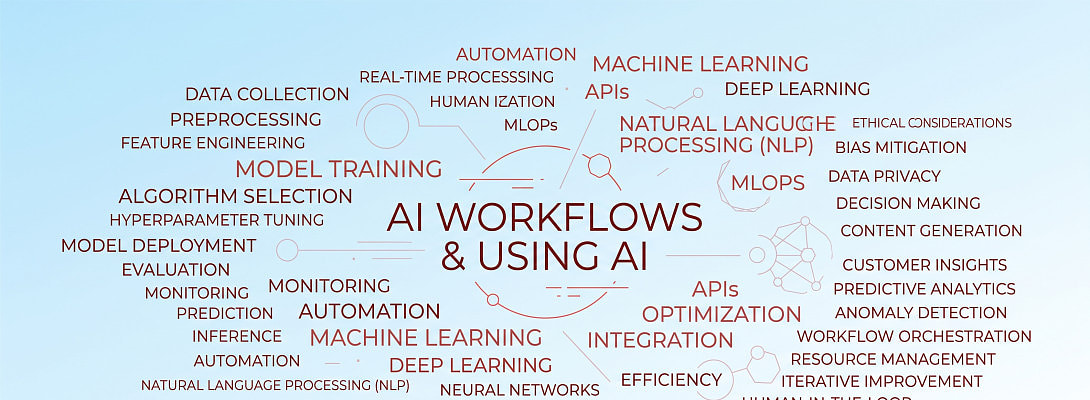
AI Workflows and How to Build One.
Affiliate marketing can turn into a pile of repetitive jobs fast. You research products, write posts, publish pages, follow up with leads, check clicks, then repeat the whole thing next week.
AI Workflows connect those jobs into a repeatable process, so the busywork stops eating every spare hour. You still set the strategy, choose what deserves your name, and approve important work. The AI handles the predictable pieces. Let's look at what that can mean for your affiliate site.
Key Takeaways
- AI workflows connect several tasks, rather than producing one isolated AI response.
- The best affiliate workflows keep a person in charge of facts, recommendations, and publication.
- Start with one repeatable bottleneck, such as creating article briefs from product research.
- Zapier, Make, and n8n fit different budgets and levels of technical comfort.
- Track time saved, errors prevented, clicks, and conversions before expanding any workflow.
What Are AI Workflows and How Do They Work?
An AI workflow is a chain of connected steps that uses artificial intelligence to analyze information, make suggestions, classify records, or prepare content. Think of it as a reliable assembly line, with you at the quality-control station.
A basic automation follows a fixed rule. A new form submission arrives, then an email goes out. An AI workflow can read that submission, identify buyer intent, create a useful summary, and route it to the right follow-up sequence. A fully autonomous agent goes further, deciding which tools to use and acting with less direction.
For affiliate marketers, less autonomy is often better. A workflow might take a product page and keyword list, pull approved facts into an article brief, flag missing details, and wait for your review before a draft reaches WordPress.
 The Core Parts of a Useful AI Workflow
Most AI Workflows have six moving parts:
- A trigger or input, such as a new keyword row, product URL, or email lead.
- An AI step that extracts details, groups keywords, or drafts a brief.
- Rules that send different inputs down different paths.
- A human approval gate for claims, links, pricing, and recommendations.
- An output, such as a CMS draft, spreadsheet record, or email sequence.
- Tracking that shows whether the workflow completed and produced a useful result.
ChatGPT or Claude can handle analysis and first drafts. A clean input matters more than a clever prompt. Give the model source URLs, product notes, target audience, and required fields. Structured outputs, such as product name, price date, key features, cautions, and citations, are much easier to test later.
Where AI Workflows Help Affiliate Marketers Most
The best uses are repetitive but still meaningful. AI can cluster keywords, prepare comparison-page outlines, turn one article into email or social drafts, tag new leads by intent, and identify pages that need refreshed information.
It can also compare affiliate click reports with traffic data to find content that gets attention but not action. That is where an AI-driven affiliate marketing strategy starts to feel practical instead of flashy.
AI speeds up preparation. It can't decide whether a merchant deserves your recommendation, whether a claim is fair, or whether an offer fits your readers.
How to Build an AI Workflow Today, Step by Step
Start with a research-to-draft workflow for one review site. Don't try to hand over your entire business on day one. Pick the part that repeats so often you could do it with your eyes closed.
Start With One Repeatable Task and a Clear Success Measure
First, map your current process. Perhaps you open product pages, collect features in a spreadsheet, review customer concerns, build an outline, and create a WordPress draft. Write each action down.
Then choose a trigger. It could be a new row in Google Sheets containing a product URL and target keyword. Define one AI task: extract only facts found in the provided sources and create a review brief.
Set a measurable result before you connect anything. You might track:
- Minutes saved per approved brief.
- Number of briefs approved without major rewrites.
- Faster time from keyword research to draft.
- Click-through rate after the finished page goes live.
Ready to put this into action?
Start your free journey today — no credit card required.
A workflow that saves ten minutes but produces weak pages is not a win. A smaller, dependable process is. For a useful reference point, this affiliate blog publishing protocol can help you see where AI fits within a broader editorial review.
Add Source Checks, Approval Rules, and Fallbacks
Next, feed the workflow trusted material. Use the merchant's current product pages, official documentation, affiliate terms, and your own analytics. Ask the model to flag information it cannot find. Never let it fill a gap with a guess.
Send the output into a review queue. Check product claims, prices, commissions, affiliate links, disclosures, and whether the recommendation still makes sense. n8n documents a human approval step for AI tool actions, which is the right mindset even if you use another platform.
Auto-publishing saves a few minutes, but one outdated price or unsupported product claim can cost far more in reader trust.
Add basic fallbacks before launching. Log each run, flag empty fields, and route failed tasks to a manual queue. Retry a temporary API failure. Do not publish a half-finished draft because a connection broke at the wrong moment.
The Best Tools for AI Workflows in Affiliate Marketing
Your AI layer handles writing and analysis. Your workflow tool moves information between apps. Your database or spreadsheet keeps the records tidy.
ChatGPT and Claude work well for research summaries, classification, drafting, and repurposing. Usage limits vary by plan and model, so check current details before building a high-volume system. Claude's plan usage limits use rolling session windows, which matters if your workflow depends on frequent manual work in the app.
How to Choose Between Zapier, Make, and n8n
Zapier is often the easiest place to begin. It has broad integrations and simple trigger-action setups. Make suits visual workflows with multiple branches and more data transformation. n8n fits technical users who want reusable components, tighter control, or self-hosting.
Pricing can look simple until volume arrives. Zapier is task-based, Make is operation-based, and n8n is execution-based, with self-hosting available. Estimate your monthly runs and the number of steps per run before choosing. A comparison of n8n and Zapier for AI work can help frame the tradeoffs.
A Simple Affiliate Marketing Stack That Can Grow
Keep the first version plain: an LLM for analysis, Zapier, Make, or n8n for routing, a spreadsheet for records, WordPress for drafts, an email platform for leads, and analytics for clicks and conversions.
Start manually with publication and final edits. Automate intake, research formatting, reminders, and reports later. That gives you time to fix the process before it starts running at scale.
Keep AI Workflows Accurate, Safe, and Worth the Cost
AI can invent features, miss a policy update, confuse a commission rate, or rewrite your content into something bland and generic. Affiliate content has extra pressure because product recommendations affect a reader's spending decisions.
 Keep source links and timestamps with every output. Review high-impact claims. Check affiliate disclosures, data privacy settings, broken integrations, and attribution gaps. Monitor failed runs weekly, then audit the results monthly.
When Should You Automate, and When Should You Stay Manual?
Automate work that is repetitive, rules-based, and easy to check. Good candidates include sorting leads, formatting research, moving approved drafts, and reporting click data.
Keep strategy, personal recommendations, sensitive claims, final editing, and compliance decisions human-led. Use a simple test: automate only after you can consistently complete the manual process and quickly verify the result.
Before a workflow goes live, confirm these points:
- Inputs are current and trustworthy.
- Output rules are clear and testable.
- A person approves high-impact actions.
- Errors have a visible fallback route.
- The result has a measurable goal and acceptable monthly cost.
Frequently Asked Questions
Do AI workflows require coding?
No. Zapier and Make let beginners build many useful workflows with visual builders. n8n can also work without much code, though technical skills help when you need custom logic or self-hosting.
Can an AI workflow automatically publish affiliate content?
It can, but automatic publishing is rarely the smart first move. Let the workflow create a draft, then review facts, links, disclosures, and your final recommendation before you publish.
Which AI workflow tool is best for beginners?
Zapier is usually the simplest starting point because its app connections and trigger-action format are easy to understand. Choose Make when you need more branches, and n8n when control matters more than simplicity.
How do I keep product information current?
Use current merchant pages as workflow inputs and save the date each source was checked. Build a refresh trigger for aging posts, then manually verify pricing, availability, and affiliate terms before updating them.
How do I measure return on an AI workflow?
Track the time saved, error rate, approval rate, publishing speed, affiliate clicks, and conversions. Compare those results with the monthly tool cost. If the workflow creates more cleanup than value, simplify it.
Build the Small System You Can Trust
AI Workflows are connected processes, not a single clever prompt. The strongest setup begins with one repetitive task, a clear input, a useful output, and human approval before anything important happens.
Start with an article brief or product comparison table. Watch what it saves, fix what it gets wrong, and let real performance data guide the next improvement. A small workflow you trust will beat full automation you have to chase all day.
Share this insight
This conversation is happening inside the community.
Join free to continue it.The Internet Changed. Now It Is Time to Build Differently.
If this article resonated, the next step is learning how to apply it. Inside Wealthy Affiliate, we break this down into practical steps you can use to build a real online business.
No credit card. Instant access.