Pysanka: Ukrainian Easter Eggs


Published on April 21, 2019
Published on Wealthy Affiliate — a platform for building real online businesses with modern training and AI.

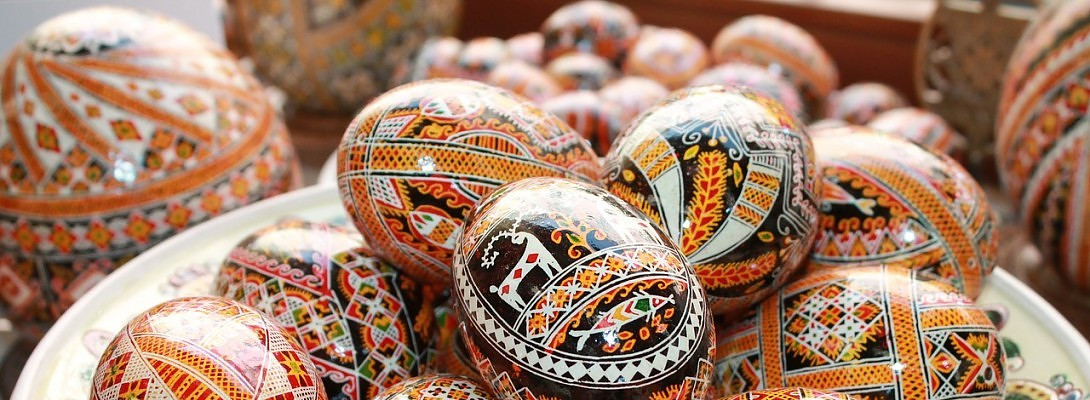
Ukrainian Easter eggs are call "pysanka". Ukrainians have been decorating eggs since Pagan times and ceramic, stone, clay, and bone pysanka have been found in archaelogical digs dating back to the 5th millenia BC. The word pysanka derives from the verb "pysanty" meaning "to write" or "to inscribe".
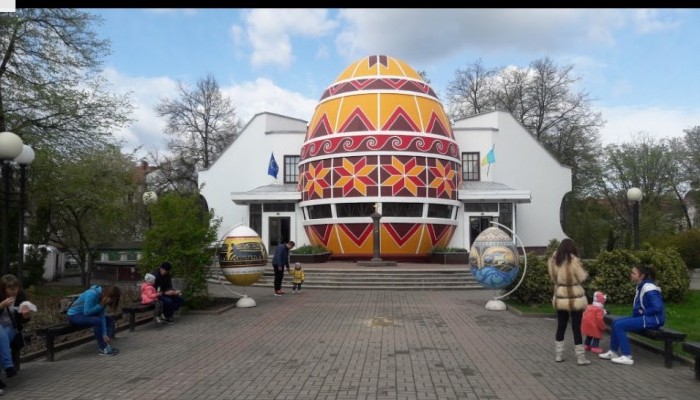
The popularity or pysanka means they are prized throughout the world, becoming highly collectible and selling for hundreds (sometime thousands) of dollars. Pysanka from Ukraine have achieved the well deserved status as "art". Artists sell their creations at fairs, festivals, art exhibits, and souvenir shops. There is also a Pysanka Museum(below) in the western city of Kolomyia.
There is truly an entire industy devoted to pysanka from production all the way to distribution, and sales of the dyes, equipment, patterns, accessories, and packing materials. Workshops and tutorials are available online if you want to try to match the ornamental masterpieces Ukrainians achieve. Good luck on that one.
Because of the fragile nature of eggshells, most have not survived time. Eggs dating back to pre-Christian times provide information about the lives of people living at that time. Much like the heiroglyphics of Egypt. Eggs are decorated with images of religious symbols, animals, buildings, nature, herbs, and many Pagan symbols. Christian symbols such as the cross and lamb appear often.
The pysanka are not just eggs decorated during religious holidays. They are imbued with the powers to ward off evil spirits, encourage plentiful harvests of honey, grain, and milk. They encourage good luck, blessings of a good marriage and many other things. A blessed pysanka could be used to find demons hiding in the dark corners of the house. If a particular egg was thought to be lucky, Ukrainians would give them away so they could pass on the good luck to others. That is the giving and hospitable nature of all Ukrainians.
Ready to put this into action?
Start your free journey today — no credit card required.
Traditionally, men were not even allowed in the same room as the women when they were decorating the eggs. They used different plants to create homemade dyes. Onion skins for brown, beets for red, bark and herbs for yellow and green, etc...
There are many legends surrounding the pysanka. The Hutsui peoples of the Eastern Carpathian mountains believe the state of the world depends on the pysanka. As long as the egg inscribing custom continues, the world will continue to exist.
Another legend concerns the Virgin Mary. It is said the Mary gave eggs to the Roman soldiers at the Crucifixion so they would be less cruel to her son. When Mary wept and her tears fell upon the eggs, they became brilliantly colored.
Simon, the peddler who helped Jesus carry the cross to Calvary left his eggs beside the road. When he returned they had turned into beautifully, intricately decorated pysanty. The powerful magic possessed by the pysanka meant they had to be disposed of properly, lest a witch got ahold of them.
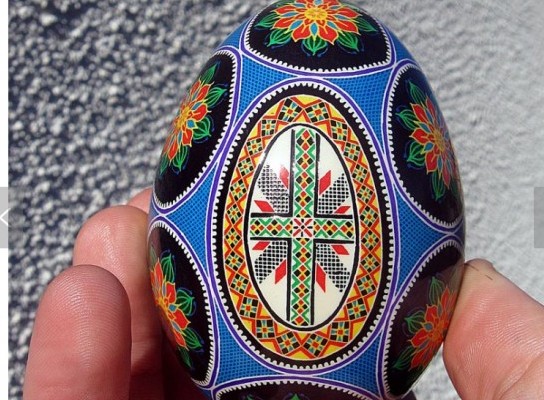
Pysanky are traditionally given to family membera and respected friends. They are a symbol of life, thus they must remain whole. By Holy Thursday the females of a family might have dozens of the decorated eggs. They are taken to church and blessed. They were then given to the priest, placed on the graves of loved ones, exchanged between unmarried girls and eligible men of the community, and kept in the home to protect and against fire, lightning and storms. Eggs were placed beneath bee hives to ensure a good honey harvest, and in the manger of cows and horses to ensure safe birthing.
A full basket of pysanky are kept in the home at all times. Serving as a protector of everything evil and a colorful display.
The color symbolism is very important also. It is thought the more colors and complex the design, the more powerful magic it held.
Red- life giving blood. Black- the "other world". Yellow- the harvest, moon, and stars. Blue- blue skies, air, good health. White- purity, virginity, birth. Green- new life, the ressurection of nature. Brown- the earth. Certain color combinations held significance also.
I hope you have enjoyed learning about Ukraine and its many customs and traditions. There is a ton of information about pysanka on wikipedia if you want to learn more.
Happy Easter to all!
Mark
Share this insight
This conversation is happening inside the community.
Join free to continue it.The Internet Changed. Now It Is Time to Build Differently.
If this article resonated, the next step is learning how to apply it. Inside Wealthy Affiliate, we break this down into practical steps you can use to build a real online business.
No credit card. Instant access.