Marketing Consultations: Beacon Hills Episode 2 | Tuesday Part 1: Lydia Martin Brand Positioning &am


Published on June 29, 2026
Published on Wealthy Affiliate — a platform for building real online businesses with modern training and AI.


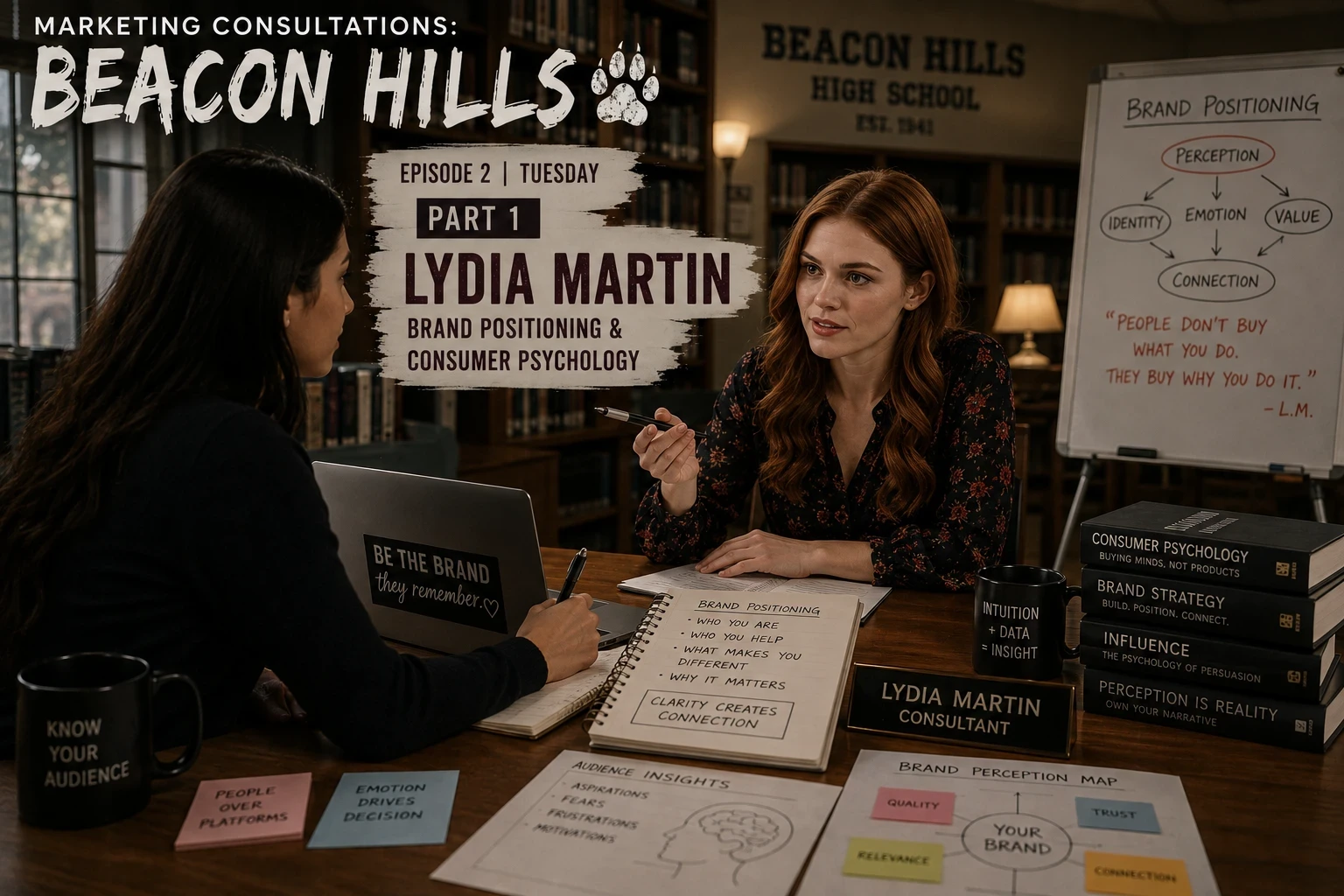
Day 2 | Tuesday Morning
After yesterday's consultations with Scott and Stiles, one thing became obvious.
Trust builds relationships.
Data reveals behaviour.
But there was still one question I hadn't answered: Why do people choose one brand over another?
That question brought me to Beacon Hills High School.
The library was unusually quiet when I arrived. Rows of books stretched across the room, and tucked away in one corner was Lydia Martin, surrounded by colour coded notebooks that somehow looked more organised than my entire marketing.
She looked up briefly: "You're three minutes early."
I laughed. "I wasn't expecting you to notice."
"I notice everything."
After spending five minutes with Lydia, I believed her.
She gestured to the chair opposite her. "So, you wanted to talk about branding?"
I opened my notebook. "Not just branding. I want to know why people choose certain brands without even realising they're doing it."
She smiled. "Now, that's an interesting question."
Your Brand Exists in Someone Else's Mind
Before I could ask another question, Lydia picked up a pen.
"Most people think a brand belongs to the company. It doesn't. A brand exists in the customer's mind."
That one sentence completely changed at how I look at positioning.
You can spend months creating the perfect logo, website and marketing campaign.
But if your audience associates your business with something different than you intended.
That's your brand. Perception beats intention every single time.
People Buy Feelings Before Features
Lydia reached for two identical notebooks from the shelf.
She placed them side by side.
"Imagine these are exactly the same. Same quality. Same pages. Same price."
Ready to put this into action?
Start your free journey today — no credit card required.
She slid one of the notebooks slightly closer. "Now imagine one is recommended by someone you admire. Which one are you choosing?"
Without thinking, I pointed to the second notebook.
She smiled. "Exactly."
People rarely make decisions using logic alone.
They buy confidence.
Belonging.
Status.
Trust.
Emotion drives decisions. Logic simply helps them justify them afterwards.
Positioning Is About Being Remembered
I ask Lydia what she thought the biggest branding mistake businesses make.
She answered almost instantly. "Trying to be everything to everyone."
Strong brands don't compete by shouting louder.
They become known for one clear idea.
When people hear your brand name - what is the first thing they think about?
If you don't know the answer.
Then neither does your audience.
Consumer Psychology Starts With Listening
As our conversation continued, Lydia kept bringing the discussion back to people.
Not demographics.
Not age groups- people.
"You can't position a brand until you understand the people you are speaking to."
That means listening.
Reading comments.
Understanding frustrations.
Paying attention to language.
The best marketing doesn't invent desires. It identifies the ones that already exists.
My Biggest Takeaway.
Before we wrapped up, I asked Lydia to sum up branding in one sentence . She closed her notebook.
"People won't remember everything you say. They'll remember how your brand made them feel about themselves."
I sat there for a moment writing that down.
Because she was right.
Great brands simply don't sell products. They shape identity.
Wrapping Up.
Leaving Beacon Hills High School, I realised branding isn't about convincing people.
It's about creating clarity.
Scott taught me to build trust.
Stiles taught me to recognise patterns.
Lydia reminded me that perception shapes reality.
And if your audience can't clearly explain what your brand stands for - it's time to refine your positioning.
Share this insight
This conversation is happening inside the community.
Join free to continue it.The Internet Changed. Now It Is Time to Build Differently.
If this article resonated, the next step is learning how to apply it. Inside Wealthy Affiliate, we break this down into practical steps you can use to build a real online business.
No credit card. Instant access.