AI Isn't the Problem. Deepfakes Are.


Published on August 1, 2026
Published on Wealthy Affiliate — a platform for building real online businesses with modern training and AI.


Disclaimer: Before reading any further, I want to make one thing very clear. This article is not against artificial intelligence. I use AI every single day for marketing, brainstorming, research, and content creation. I believe it's one of the most powerful creative tools available today. What this post is about is the growing misuse of AI, particularly deepfakes and non-consensual AI-generated content, and why ethical AI education has never been more important
(Disclaimer is written by Chat GPT)
Lately, there has been something weighing on my mind, and if I don't write about it, it will keep sitting with me.
As someone who creates content with AI , I spend a lot of time advocating for its benefits. I've seen first hand how it can help people launch businesses, overcome creative blocks, and become more creative creators.
But there's another side of AI we can't ignore.
Over the past few months, I've repeatedly come across AI-generated deepfakes on social media. Some involve public figures including Pakistani actress Hania Aamir. Even more disturbing are reports of AI-generated explicit content involving children.
No matter how many people report these posts, they often continue circling or reappear through different accounts. It's frustrating, upsetting, and raises serious questions about how platforms are moderating AI-generated abuse.
This isn't innovation. It's exploitation.
A Conversation That Hit Close To Home.
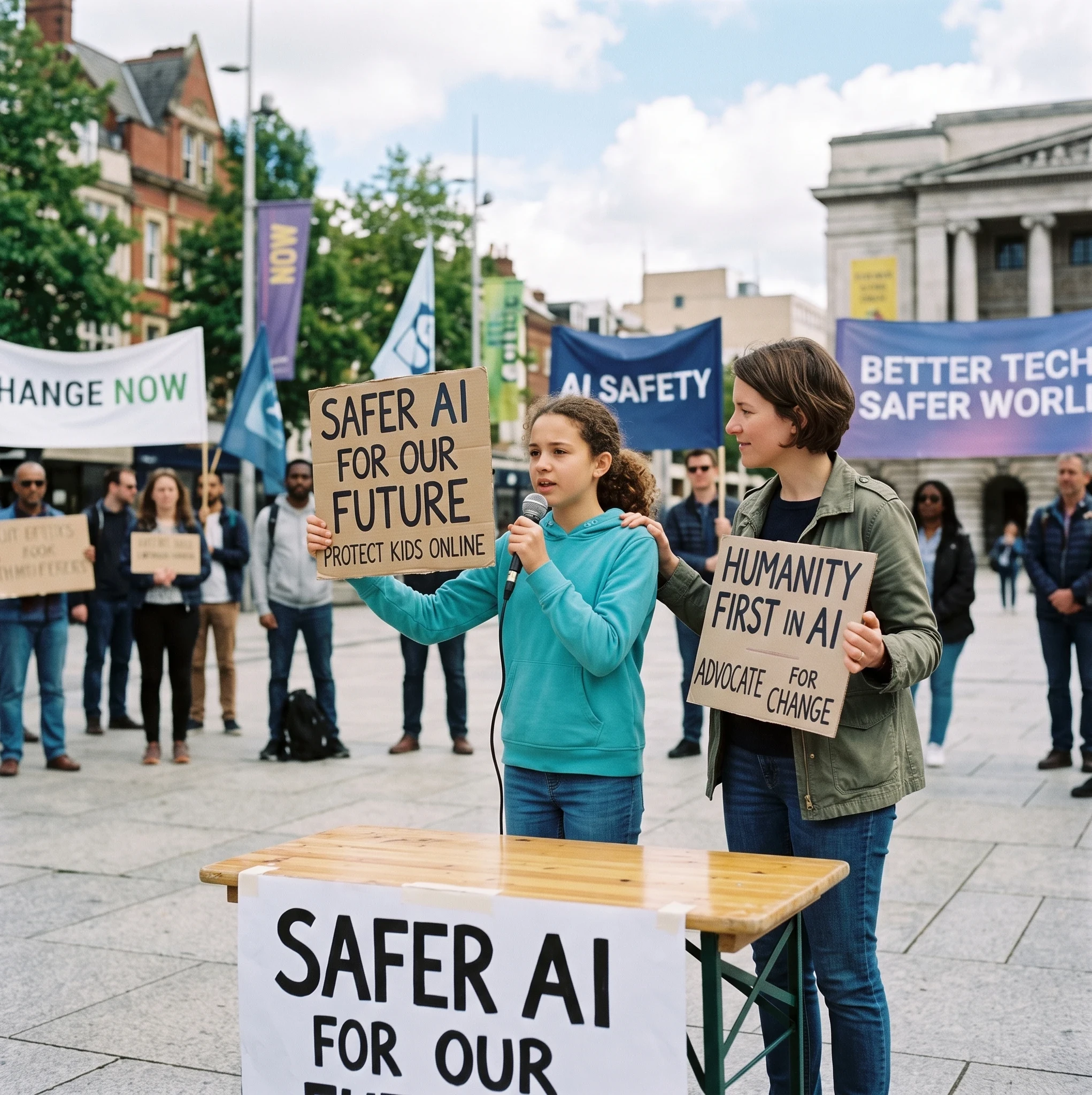
Recently, I was talking to my 12-year old cousin. She told me something that stuck with me. She's scared of AI.
Not because she thinks AI is evil, but because she's aware that people can misuse it. She's seen conversations online about deepfakes and AI-generated images , and at just twelve years old, she's already worrying about what someone could do with this technology.
That really made me stop and think.
Children shouldn't have to fear technology because of the actions of irresponsible people.
When a young person begins to associate AI with exploitation instead of creativity, we've failed to teach the difference between responsible innovation and harmful behaviour.
The Conversations We Should be Having.
Whenever people hear stories like these, the response is often "AI is dangerous."
I don't agree.
Ready to put this into action?
Start your free journey today — no credit card required.
AI isn't making these decisions, people are.
The problem isn't artificial intelligence. The problem is the lack of ethics behind some of the people using it.
That's why I believe our conversations need to shift.
Instead of teaching people how to use AI , we also need to teach them how to use it responsibly.
Whether you are creating blog posts, images, videos, code, or marketing campaigns, ethics should be part of the learning process from day one.
Just because a tool can do something, doesn't mean it should.
Why This Matters to the Wealthy Affiliate Community.
As affiliate marketers, bloggers, and digital creators, many of use AI to improve our workflow.
We write articles.
We brainstorm ideas.
We generate images.
We optimize content.
We're showing people what responsible AI looks like. That means we also have the responsibility to speak up when AI is being used to exploit, deceive, or violate someone's privacy.
If we stay silent, the public conversation around AI becomes dominated by its worst uses instead of its greatest potential.
AI Needs Better Education, Not Just Better Prompts.
One thing I realised is that prompt engineering is only half of the equation.
The other half is ethics.
New AI users should be guided on:
- Respecting consent and privacy.
- Understanding copyright and intellectual property.
- Avoiding deceptive or manipulative content.
- Recognising the real world harm deep fakes can cause.
- Using AI to solve problems, not create them.
Teaching people how to write better prompts without teaching them how to use AI responsibly is like teaching someone to drive without explaining the road rules.
Knowledge without ethics can become dangerous.
My Hope.
I don't want fear to define the future of AI.
I want responsibility to.
I want stronger moderation for platforms.
I want better education for new AI users.
Most of all, I want the new generation to see AI as a tool for creativity, learning, accessibility, and innovation. Not something that they are afraid of because of how others have abused it.
AI has incredible potential. Let's make sure that we're teaching people how to use that potential safely, ethically, and with respect for the people behind every face, voice, and story.
Share this insight
This conversation is happening inside the community.
Join free to continue it.The Internet Changed. Now It Is Time to Build Differently.
If this article resonated, the next step is learning how to apply it. Inside Wealthy Affiliate, we break this down into practical steps you can use to build a real online business.
No credit card. Instant access.