3 Types of Search Intent Every Blogger Must Understand to Rank on Google


Published on February 26, 2026
Published on Wealthy Affiliate — a platform for building real online businesses with modern training and AI.

Why Search Intent Matters More Than Keywords
When I first started blogging, I focused on keywords.
I would find the “perfect” keyword in Jaaxy, stuff it in my article, and hope Google noticed.
But ranking didn’t happen. Traffic was slow. Engagement was low.
Then I learned the real secret: Search intent is everything.
What Is Search Intent?
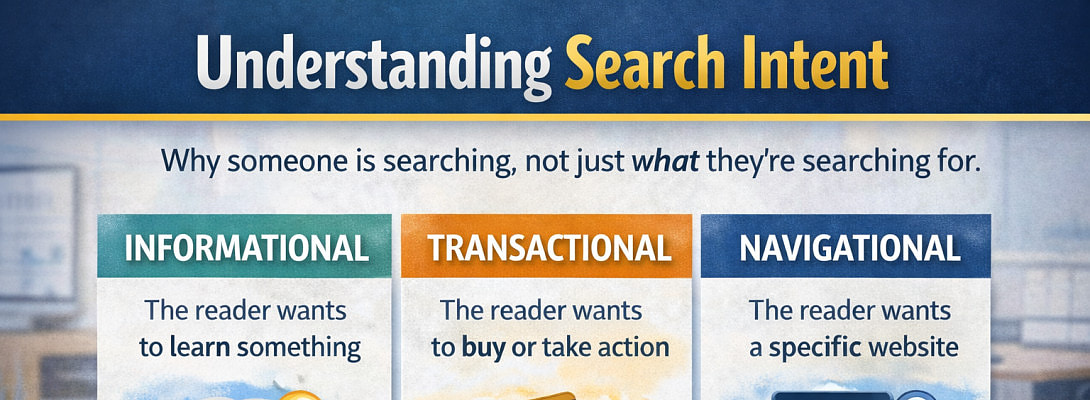
Search intent is the reason someone types a query into Google.
There are three main types:
1️⃣ Informational: The reader wants to learn something.
- Example: “How to structure a blog post for SEO”
2️⃣ Transactional: The reader wants to buy or take action. - Example: “Best SEO course for beginners”
3️⃣ Navigational: The reader wants a specific website or resource. - Example: “Wealthy Affiliate login”
Why Keywords Alone Aren’t Enough
Keywords tell you what people are typing, but not why.
Two articles could target the same keyword, but if the intent is different, Google will only rank the one that matches what the searcher really wants.
Ready to put this into action?
Start your free journey today — no credit card required.
Focusing on intent allows you to:
• Write content that satisfies the reader
• Improve dwell time and engagement
• Rank higher because Google sees your content as relevant
How to Align Your Content With Search Intent
Here’s my step-by-step approach:
1️⃣ Identify the Intent
- Ask: Is the searcher looking to learn, buy, or find a resource?
2️⃣ Outline Around Their Goal
- Structure your article so it answers the main question immediately.
- Include subheadings for supporting points and examples.
3️⃣ Add Actionable Value
- Give readers what they came for — tips, examples, tools, or steps they can take.
4️⃣ Review and Refine
- Check: Does this article fully satisfy the search intent?
- Adjust headings, add examples, or clarify points if needed.
Example in Action
Keyword: “Best way to improve SEO”
- Informational intent: Step-by-step guide on SEO strategies
- Transactional intent: Review of SEO tools or courses to buy
- Navigational intent: Guide to a specific SEO website or resource
Aligning content with intent ensures the right audience finds your article — and Google rewards it.
💬 Question for you: When you pick a keyword, do you focus on the intent first or just the keyword itself? Share your approach below!
#SEO #SearchIntent #BloggingTips #ContentStrategy #WACommunity
Share this insight
This conversation is happening inside the community.
Join free to continue it.The Internet Changed. Now It Is Time to Build Differently.
If this article resonated, the next step is learning how to apply it. Inside Wealthy Affiliate, we break this down into practical steps you can use to build a real online business.
No credit card. Instant access.