What Is the Blockchain and Why Do I Care?

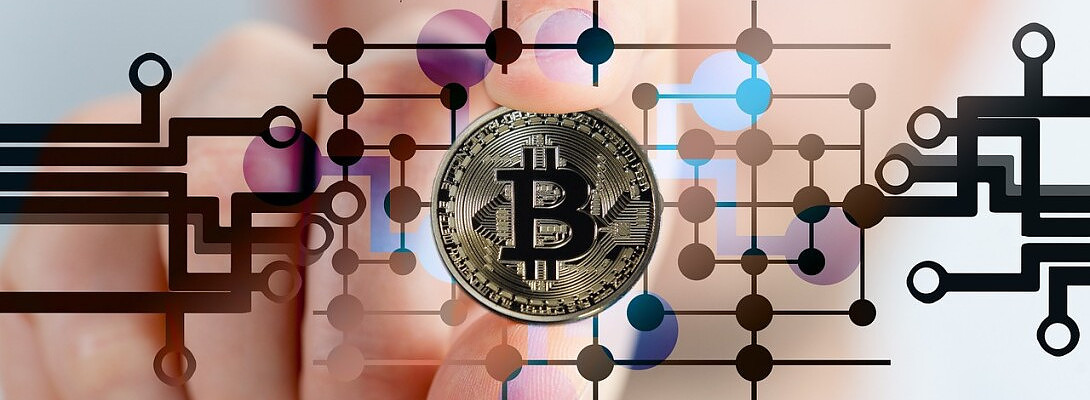
blog cover image
11
27
1.4K followers

It All Started with Crypto

Several months ago I made the statement: It all started with crypto-- Then I wrote a series of loosely related articles trying to explain it-- and never did. I say loosely related because the concepts presenting themselves grew like weeds in summer. The research included so much history, so many variables, and so many acronyms, AR, AI, VR, and Web3 to name a few.

AI is the biggie, i.e., ChatGPT, which is teaching itself, one hopes, all things good and useful, but is, in fact, teaching itself what its creators want it to learn. Do we trust Bot's creators? Duh!

Bot is this AI genius's name. I asked him.

CBS reports "Billionaire Elon Musk, Apple co-founder Steve Wozniak and former presidential candidate Andrew Yang joined hundreds calling for a six-month pause on AI experiments. . ."

Oh what a web we weave. . .

But before we can take more deep dives into AI, Web3, information theory, or human nature, we need to understand the basics of blockchain and its purpose/s. Its inventor, Satoshi Nakamoto, envisioned the blockchain as the vehicle serving to control and distribute Bitcoin. (See, it all started with crypto.) As we will see, it has evolved far beyond that.

Follow the links below for more information.

"Bitcoin is a crypto asset that began as a concept described in a paper published on the Internet in 2008 by someone assuming the name Satoshi Nakamoto.

Through the use of a distributed ledger known as a blockchain, Bitcoin can store and transfer values over the Internet without the need for an issuing authority or administrator.

Because Bitcoin has the highest market capitalization of all the numerous crypto assets, it is not an exaggeration to say it is the most prominent crypto asset. There are many currencies that split off from or are derived from Bitcoin, and it is the cornerstone of crypto assets."

Why Should We Care About Blockchain/s?

If you said, "That's about crypto, why should I care?" You would be half correct. Using latest data, around 80% of the U.S. population and over 95% of the global population don't care about crypto as an instrument for investment, meaning they don't own any. (Don't read too much into that-- most in the don't care group are too poor to care.)

I would venture further to guess, among crypto investors, not too many know, or care, what a blockchain is, or its purpose. However, there is a difference between investors and traders. Crypto trading is a complicated subject, and traders need to understand what they are doing.

Traders might get it. Or not--

I know, I'm slow. OK.

But until recently, I did not know the difference between a cryptocurrency exchange built on the blockchain and one set up like Bank of America.

But I am an early adapter. I bought crypto. Yay for me.

It's sitting there in the largest U.S. centralized exchange waiting to (go back up) be moved to a decentralized exchange, or a hard-wallet, as soon as I figure out how to do it.

Satoshi designed a financial system, but it is at its core, where we can find freedom from various tyrannies. The key expression in the above quote is "without the need for an issuing authority or administrator".

What is the answer to the other half of that question?

Even for less informed traders or investors, non-investors, and low-income people, it is important to understand the concept of BLOCKCHAIN-- in that programs built on it are decentralized.

When I started reading about "Biden Bucks" and other government digital coins, I woke up. China has a digital coin. This means it controls its citizens money.

It is not the scent of a rose I smell.

Decentralized Versus Centralized

I am not going to explain the mechanics of blockchain here. That is truly a convoluted tongue twister. You can google it. Rather I will wrap this up with more rhetorical reasoning in favor of decentralized.

The fact is, like just about everything else in life, this is not as easy as it may sound. There are many gray areas. There are already a mishmashes of technologies in the works or waiting in the wings. Apparently, it is easier to build software than a platform on which to run it. Just ask Bitcoin and its rival, Ethereum.

Centralized

Consider Bank of America. which uses a fairly traditional corporate structure. There is a Chairman-CEO at the top who is the boss. And under him sit. . . chairs. And under them sit. . .. And under them are a multitude of local branches, managers, loan officers, tellers, etc.

There is room for human error or bad intent at each one of those human points of entry. Of, course, computer technology mitigates the risk to a very large degree. And for that, we are fortunate.

The subject of security, or lack thereof, I leave for another day. Suffice it to say, blockchain solves most security issues, far more than is widely believed, also a subject for another day.

Before you bring up the FTX and Sam Bankman-Fried, crypto exchange scandal, that was a centralized exchange. He was a crook and a lot of people smarter than me lost money. I did not own crypto in FTX. But it managed to bring down two other exchanges, in which I did.

Decentralized

I believe the United States is meant to be a form of decentralized government, leaving its 50 states mostly autonomous. Well, that's the way it's supposed to work. We won't go there today. The reason I mentioned it is to show there are degrees of both centralization and decentralization.

Satoshi's blockchain is based on a truly decentralized algorithm. There is one block per person, or company, and there is one transaction. There are no middlemen. The transaction is transmutable and eternal. No more doctoring the books. And it does this in a few minutes.

In the case of money, it touches no extra hands.

I encourage you to try to understand this a little, especially the dangers of government digital currency.

Thank you for reading my post.

11
27

Join FREE & Launch Your Business!

Exclusive Bonus - Offer Ends at Midnight Today

00

Hours

:

00

Minutes

:

00

Seconds

2,000 AI Credits Worth $10 USD

Build a Logo + Website That Attracts Customers

400 Credits

Discover Hot Niches with AI Market Research

100 Credits

Create SEO Content That Ranks & Converts

800 Credits

Find Affiliate Offers Up to $500/Sale

10 Credits

Access a Community of 2.9M+ Members

By continuing, you agree to our Terms of Service and Privacy Policy
No credit card required

Recent Comments

27

Hi, Donna

Great post!

I'll add a little info that may be of interest to you.

As you know, blockchain is a digital multiuser hyper-ledger that distributes decentralized data to all stakeholders that can control blocks in their access-domain by way of smart contracts, etc.

Although blockchain was developed for cryptocurrency, it is being adapted for other areas such as AI, logistics optimization, weather forecasting, and healthcare.

Many enterprise-level electronic medical records (EMRs) are moving toward blockchain to give their records enhanced interoperability with other EMR systems in a more secure environment that gives patients more access to their medical records and who is allowed to view them.

However, although the centerpiece of the blockchain system is transaction transparency, accountability, and security, its security is being threatened by quantum computing, which has given rise to the field of quantum blockchain.

I'm working as a consultant for a federally funded group tasked with developing quantum blockchain for healthcare systems. I'm involved in the clinical and healthcare informatics end. The remainder of the R&D team consists of computer engineers, physicists, mathematicians, and security analysts.

Other groups are working on quantum blockchain for financial systems, etc.

This quantum technology is projected to be very cost-prohibitive but will neutralize the advantage that quantum computers will have in breaking security keys even more complex than those used by conventional blockchain technology. For example, it will be able to withstand attacks from quantum computers such as an external attack, intercept-measure-repeat attack, and entanglement-measure attack.

Of course, quantum blockchain technology's other big advantage will be reducing the massive energy requirements involved in cryptocurrency mining.

Here are a few references that might interest you.


https://www.quantumblockchaintechnologies.co.uk/

https://arxiv.org/pdf/2210.03638.pdf

https://arxiv.org/pdf/2202.07764.pdf

Rock On! 🤘
Frank 🎸

1

Hi Frank. I knew you would help me out here. Your comment is just what the doctor ordered. You just said everything I wanted to say, but didn't know how-- plus so much more. I will follow your links. Thank you. The project you are involved in is so exciting. I would love to hear more as it evolves. This made my day.

2

You’re entirely welcome, Donna! 😎

Are you taking some time off for the long Easter weekend?

We do a four day Italian festa starting tonight with “Good Friday” and all the way through “Easter Monday!”

Happy Easter! 🐰
Frank 🎸

1

Hi Deelilah, I want to say something about Bitcoin. I was caught up in a scam that used Bitcoins. It was terribly, because this person stole business checks and alter the routing number, account number.

So I don't trust anything dealing with Bitcoins or anything else. I don't know if there are legitimate investors or not and I don't want to know because with that experience left a bad taste in my mouth.

Mary

1

Hi Mary. I am sorry to hear about your trouble involving Bitcoin. I think scammers are running out of ways to fool us with regular banking scams and now they are using crypto. In my post, I was trying to inform folks about the blockchain, which was built to support Bitcoin, but does so many more useful things now. Thank you for taking the time to read my article.

1

Fun experience for me, about two years ago, got curious with Bitcoin, I gambled on $100 that earned me $1000 .
I don't know what I was doing but luck seems to play on my side.
I still have that $1000 to gamble with Bitcoin or crypto when I get the chance....😃

1

Regards to the government, traditional currencies, banks or digital blockchain coins make no difference whatsoever. Any financial activity you undertake today is likely to be monitored 24/7. The only way to remain invisible is through hard cash, although withdrawing a large sum from the bank will promptly raise a red flag.

Personally, I support the power of the government. People, in general, are foolish and require governance. In countries like China, you receive what you are given, and in countries like the US, you receive what you vote for. Regardless, the government must oversee all aspects of life. Freedom is merely an overrated term that does not exist anywhere. Perhaps, if you own your own country, you can do as you please, but the risk of the US or any other powerful countries disapproving of your governance and deploying troops or a nuclear attack remains.

As I mentioned in my earlier comment, the blockchain system cannot operate due to the substantial amount of power it requires. Even if implemented, it would have no impact on your privacy.

1

Whilst the American banking system undoubtedly requires some updating, blockchain is not the solution. Between 2011 and 2013, I actively mined, transferred and sold Bitcoin. At that time (2013), a BTC was worth around £300 (I know I should have kept it, but who can predict the future?). In 2011, my trusty old PC was sufficient for mining the coins, but by 2013, you needed robust rigs to get anywhere. Nowadays, to mine a single coin, you require an aeroplane hangar-sized space with heavy air conditioning or to be set up in Greenland. And that's just for mining.

Back then, I had my own Bitcoin wallet. I still have less than a coin on it, but for years now, I have been trying to remember the password. Eventually, I discovered that my wallet had been deactivated (destroyed) due to long inactivity. I did not know they did that, so it's not accessible anyway. In 2013, the Bitcoin database was only a few hundred MB in size. Today, if you were to download it, it would be nearly 300GB. That means many more blocks are processing, sending, receiving and updating the data.

All of the above has one dangerous constant: power. Maintaining a blockchain requires an enormous amount of electricity. You could power cities or even countries with the amount it needs. That, in itself, kills any blockchain plans because it would completely destroy the planet within years.

2

See more comments

Join FREE & Launch Your Business!

Exclusive Bonus - Offer Ends at Midnight Today

00

Hours

:

00

Minutes

:

00

Seconds

2,000 AI Credits Worth $10 USD

Build a Logo + Website That Attracts Customers

400 Credits

Discover Hot Niches with AI Market Research

100 Credits

Create SEO Content That Ranks & Converts

800 Credits

Find Affiliate Offers Up to $500/Sale

10 Credits

Access a Community of 2.9M+ Members

By continuing, you agree to our Terms of Service and Privacy Policy
No credit card required

2.9M+

Members

190+

Countries Served

20+

Years Online

50K+

Success Stories

The world's most successful affiliate marketing training platform. Join 2.9M+ entrepreneurs building their online business with expert training, tools, and support.

© 2005-2025 Wealthy Affiliate
All rights reserved worldwide.

🔒 Trusted by Millions Worldwide

Since 2005, Wealthy Affiliate has been the go-to platform for entrepreneurs looking to build successful online businesses. With industry-leading security, 99.9% uptime, and a proven track record of success, you're in safe hands.