Bob and Jenny on Zork


Published on August 4, 2026
Published on Wealthy Affiliate — a platform for building real online businesses with modern training and AI.

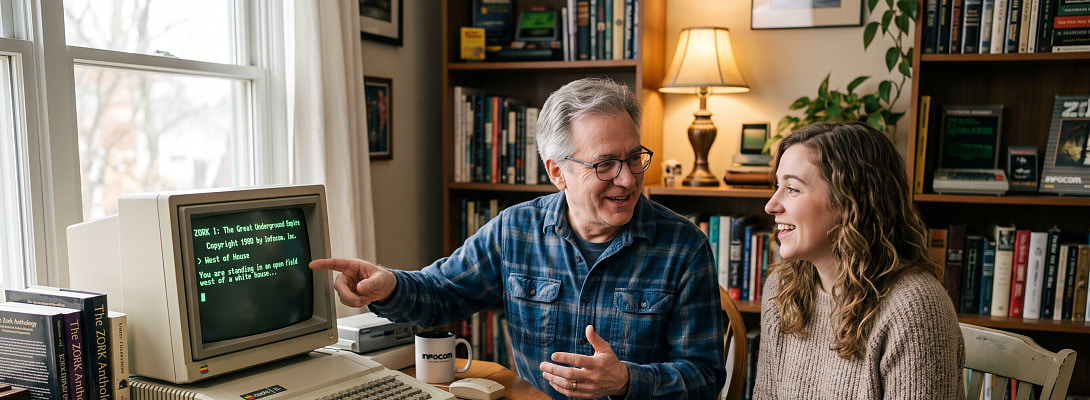
Here’s an adorable, conversation-style version for Bob and Jenny, written in a simple, humorous, WA-friendly tone!
Bob: “Alright Jenny, today we are opening the old treasure chest of gaming history. And inside it is a game called Zork.”
Jenny: “Ah yes, the game that looks like it came from a time when computers were still discovering their own personalities.”
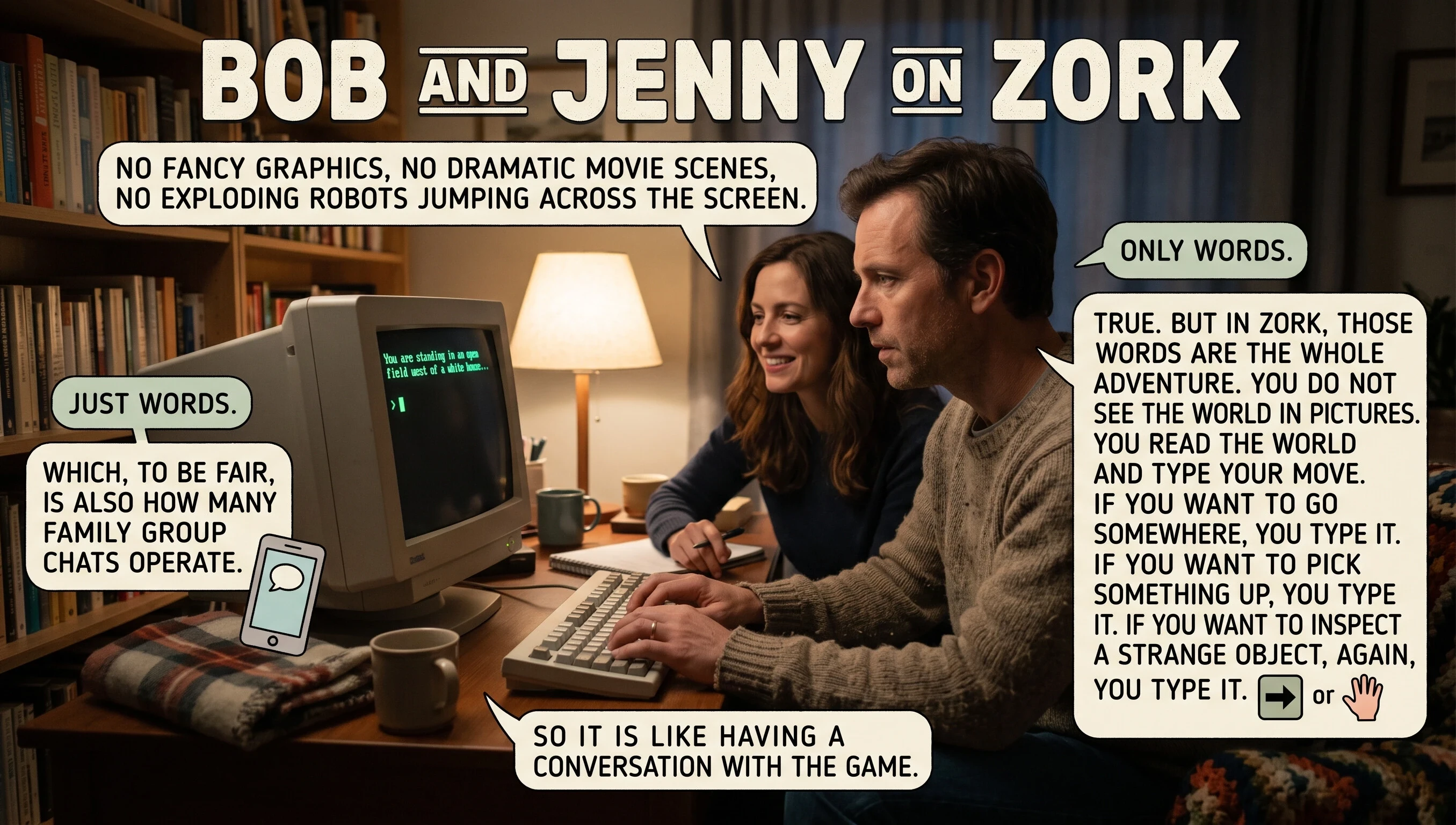
Bob: “Exactly. No fancy graphics, no dramatic movie scenes, no exploding robots jumping across the screen.”
Jenny: “Just words.”
Bob: “Only words.”
Jenny: “Which, to be fair, is also how many family group chats operate.”
Bob: “True. But in Zork, those words are the whole adventure. You do not see the world in pictures. You read the world and type your move. If you want to go somewhere, you type it. If you want to pick something up, you type it. If you want to inspect a strange object, again, you type it.”
Jenny: “So it is like having a conversation with the game.”
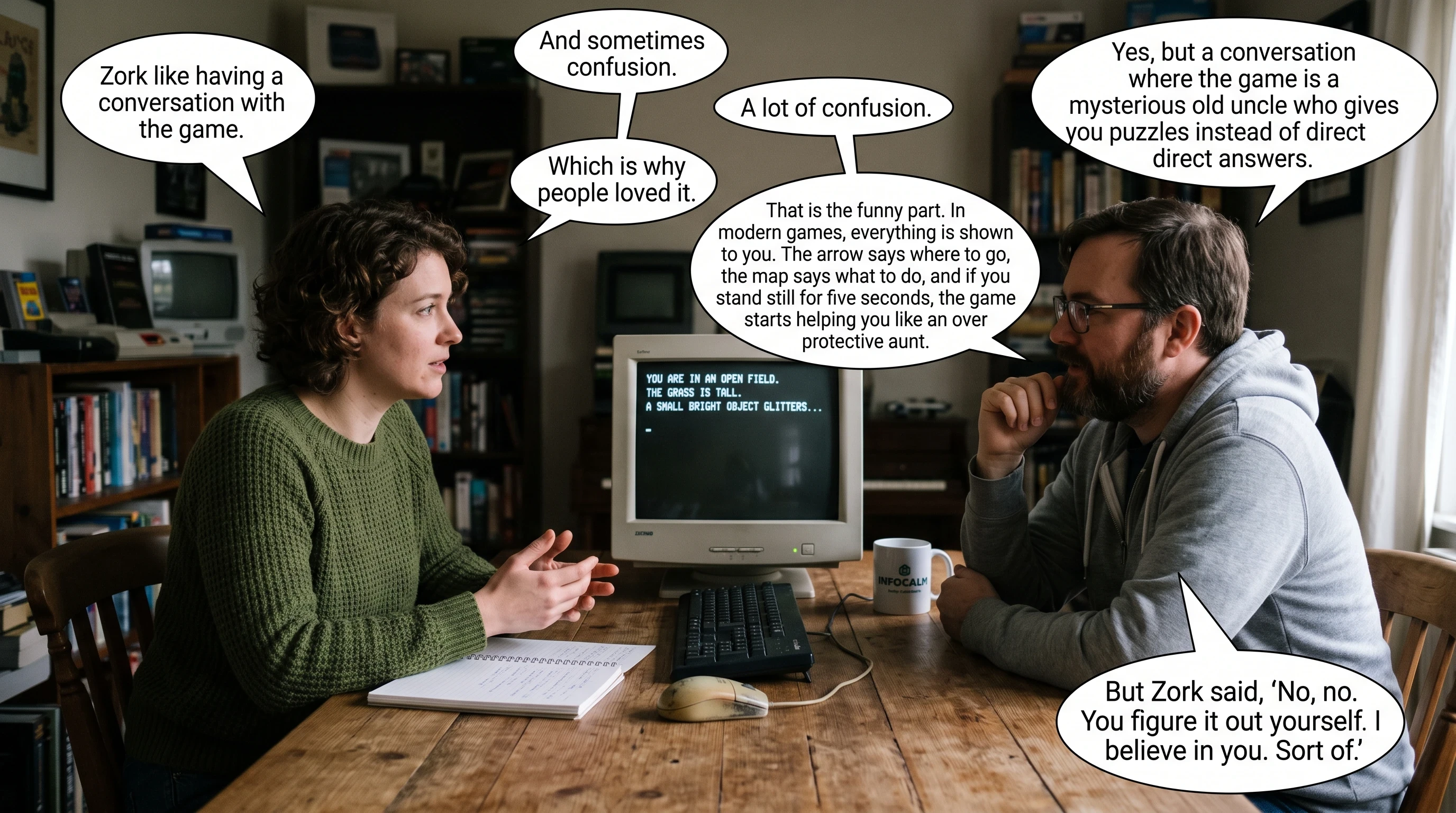
 Bob: “Yes, but a conversation where the game is a mysterious old uncle who gives you puzzles instead of direct answers.”
Jenny: “And sometimes confusion.”
Bob: “A lot of confusion.”
Jenny: “Which is why people loved it.”
Bob: “That is the funny part. In modern games, everything is shown to you. The arrow says where to go, the map says what to do, and if you stand still for five seconds, the game starts helping you like an over protective aunt.”
Jenny: “But Zork said, ‘No, no. You figure it out yourself. I believe in you. Sort of.’”
Bob: “And that is what made it special. It was one of the early text adventure games, which means the entire game was built around reading, thinking, and typing commands. You were not just playing. You were imagining.”
Jenny: “So the player had to become half storyteller and half detective.”
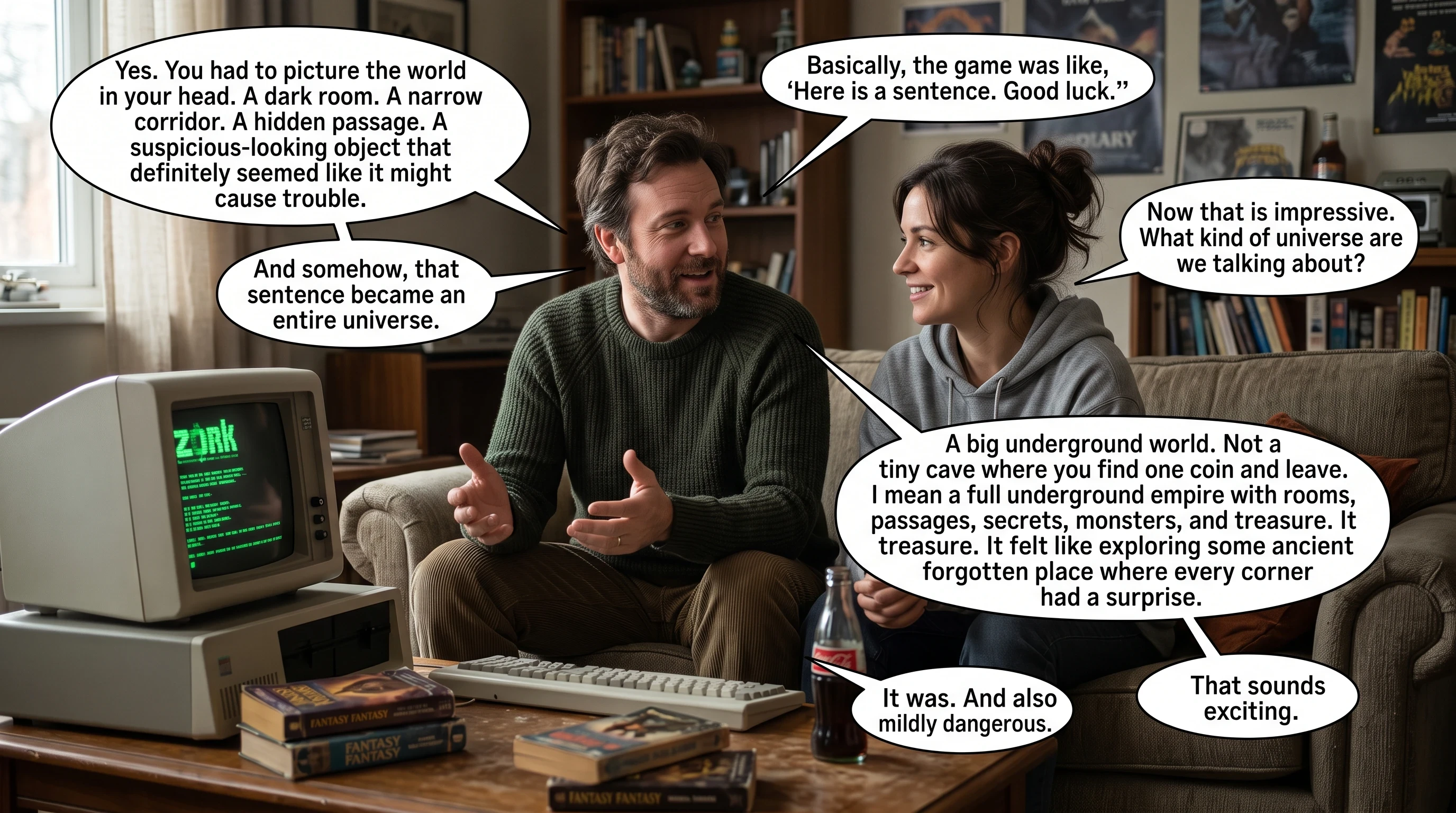
 Bob: “Yes. You had to picture the world in your head. A dark room. A narrow corridor. A hidden passage. A suspicious-looking object that definitely seemed like it might cause trouble.”
Jenny: “Basically, the game was like, ‘Here is a sentence. Good luck.’”
Bob: “And somehow, that sentence became an entire universe.”
Jenny: “Now that is impressive. What kind of universe are we talking about?”
Bob: “A big underground world. Not a tiny cave where you find one coin and leave. I mean a full underground empire with rooms, passages, secrets, monsters, and treasure. It felt like exploring some ancient forgotten place where every corner had a surprise.”
Jenny: “That sounds exciting.”
Bob: “It was. And also mildly dangerous.”
Jenny: “As all good adventures should be.”
Ready to put this into action?
Start your free journey today — no credit card required.
Bob: “Exactly. You would be walking around, trying to solve puzzles, and then suddenly the game would throw something strange at you. A locked door. A riddle. A maze. A creepy creature. The kind of thing that makes you pause and say, ‘Wait, what just happened?’”
Jenny: “That sounds a lot like life, honestly.”
 Bob: “Maybe that is why it still feels relatable.”
Jenny: “So what exactly did a player do in Zork?”
Bob: “They explored, collected treasures, solved problems, and tried not to make foolish mistakes.”
Jenny: “So again, like life.”
Bob: “Yes, but with more goblins and fewer bills.”
Jenny: “Now that is a version of adulthood I could respect.”
Bob: “The game was clever because it did not rely on graphics to create excitement. It relied on language. You had to read carefully. You had to think. You had to experiment. If your command was wrong, the game would not politely hold your hand. It would just stare back at you through the screen and say, in its own way, ‘Try again, champion.’”
Jenny: “So the game had attitude.”
Bob: “A little bit. But a lovable one.”
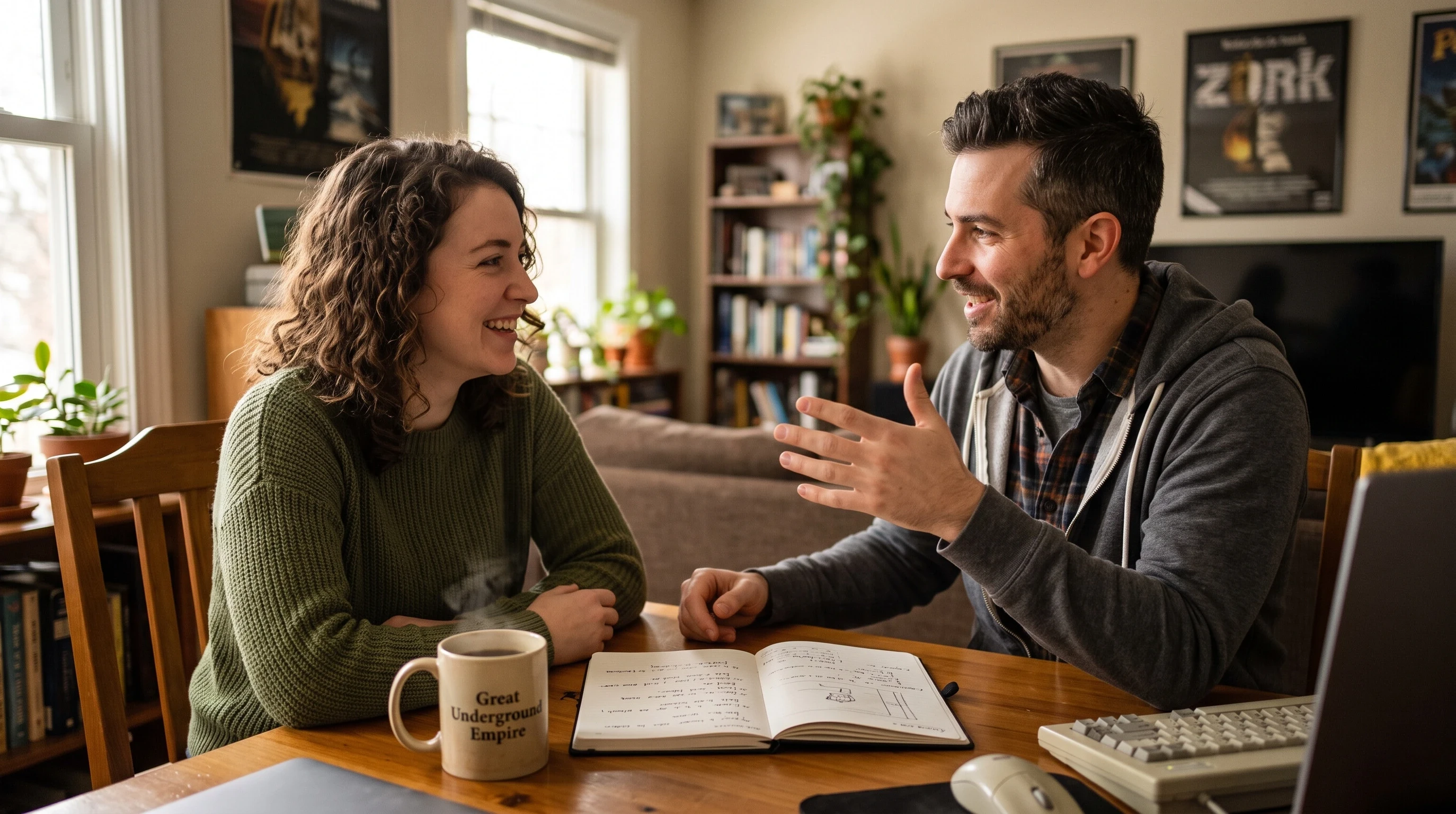 Jenny: “And people actually enjoyed that?”
Bob: “Very much so. Because it felt like solving a mystery one sentence at a time. Every small victory felt meaningful. You opened a door. You found a key. You escaped a trap. You discovered a hidden path. It was satisfying in the same way finding the correct lid in a box of tangled cables feels satisfying.”
Jenny: “That is a very specific joy.”
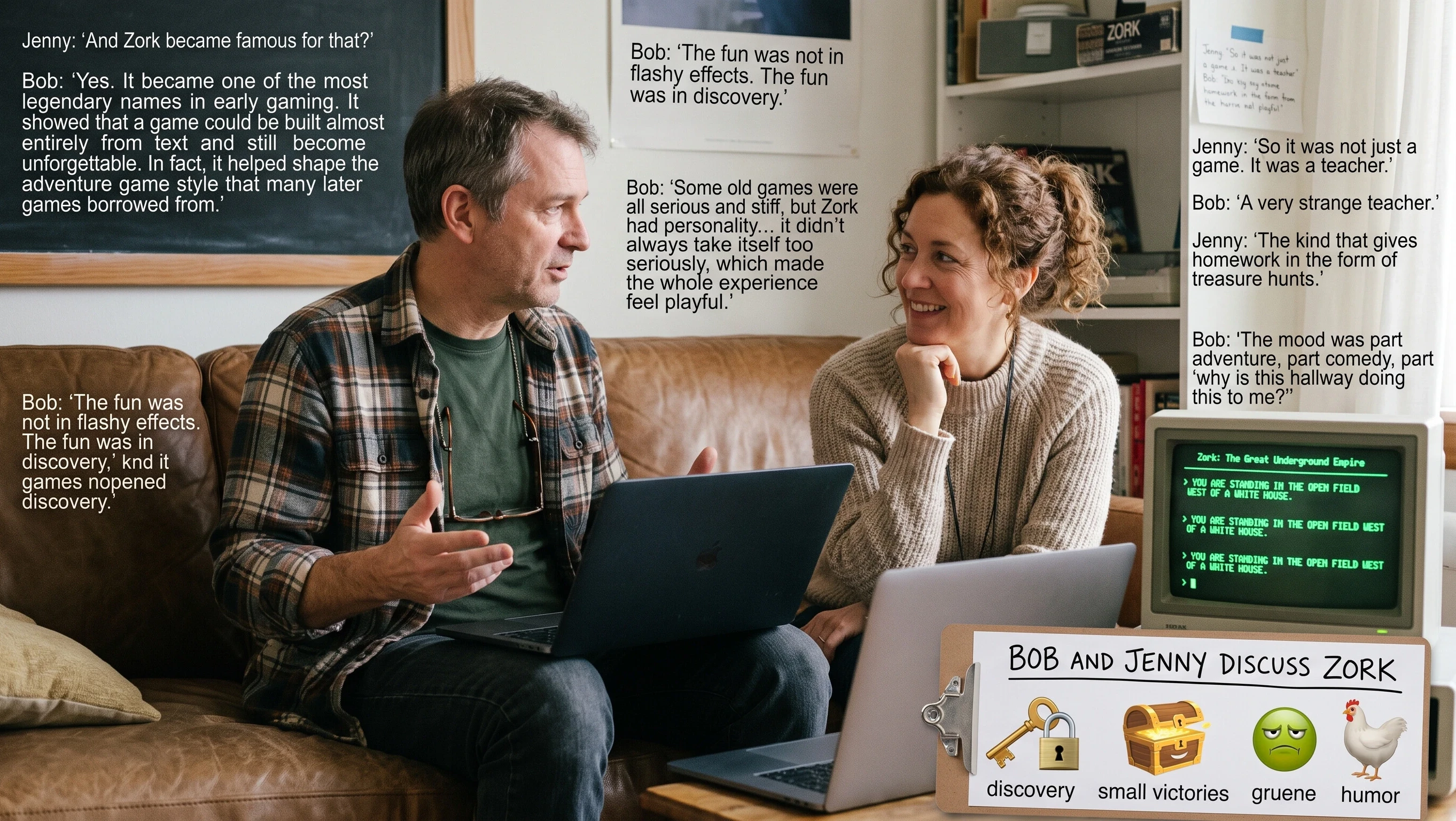
Bob: “Exactly. You understand. The fun was not in flashy effects. The fun was in discovery.”
Jenny: “And Zork became famous for that?”
Bob: “Yes. It became one of the most legendary names in early gaming. It showed that a game could be built almost entirely from text and still become unforgettable. In fact, it helped shape the adventure game style that many later games borrowed from.”
Jenny: “So it was not just a game. It was a teacher.”
Bob: “A very strange teacher.”
Jenny: “The kind that gives homework in the form of treasure hunts.”
Bob: “Exactly. And it also had a sense of humor. That matters a lot. Some old games were all serious and stiff, but Zork had personality. It did not always take itself too seriously, which made the whole experience feel playful.”
Jenny: “So players were not only solving puzzles. They were also enjoying the mood.”
Bob: “Right. The mood was part adventure, part comedy, part ‘why is this hallway doing this to me?’”
Jenny: “I like that. Very human.”
 Bob: “And very memorable.”
Jenny: “If we had to explain Zork to a modern WA Community member in one simple way, what would we say?”
Bob: “We would say this: Zork is a classic old computer adventure where you type your way through a mysterious underground world, solve puzzles, collect treasure, and laugh at how clever and tricky the whole thing is.”
Jenny: “That is neat.”
Bob: “And then we could add: it is like a choose-your-own-adventure story, but instead of turning pages, you type commands.”
Jenny: “And instead of looking at beautiful graphics, you use your imagination.”
Bob: “Which is actually powerful.”
Jenny: “Because the imagination never runs out of resolution.”
Bob: “Very nicely said.”
Jenny: “Thank you. I try.”
Bob: “So yes, Zork is old, but it is not dusty in spirit. It is the kind of classic that still makes people smile because it reminds them that good ideas can travel very far, even when the technology is simple.”
Jenny: “In other words, no fancy dress needed. Just a strong story, sharp puzzles, and a little bit of chaos.”
Bob: “That is Zork in a nutshell.”
Jenny: “Or in an underground chamber.”
Bob: “Preferably with a lamp.”
Share this insight
This conversation is happening inside the community.
Join free to continue it.The Internet Changed. Now It Is Time to Build Differently.
If this article resonated, the next step is learning how to apply it. Inside Wealthy Affiliate, we break this down into practical steps you can use to build a real online business.
No credit card. Instant access.