AI Engine Optimization Guidance


Published on September 3, 2026
Published on Wealthy Affiliate — a platform for building real online businesses with modern training and AI.


AI engine optimization is changing how we can approach content creation and search visibility online.
Instead of only focusing on classic SEO methods, it's a good idea to now pay close attention to how AI tools, like ChatGPT, Claude, and Perplexity, find, understand, and recommend blogs and websites.
If you’ve heard of GEO (Generative Engine Optimization), you know this new way shares some similarities with SEO, but comes with its own goals and techniques.
In this guide, I’ll break down how to get content noticed by leading AI engines, making sure our perspective is clear and relatable for anyone eager to adapt.

Why AI Engine Optimization Matters
AI engines are quickly shaping how people find answers online. With conversational search becoming more popular, many users ask platforms like ChatGPT for recommendations, quick overviews, and citations.
The information these tools present is often pulled from various online sources, including personal blogs or business websites like mine, if the content is easy for AI to understand and appears trustworthy.
I’ve noticed that getting cited by an AI engine can bring new readers, boost traffic, and establish a website as an expert source.
This shift means I have to rethink both what I write and how I organize my posts so they stand out in the eyes of AI-driven technologies.
The nature of digital discoverability has changed, making adaptation crucial for anyone serious about building online presence and authority today.
Key Principles for Optimizing Content for AI Engines
Optimizing for AI starts with clear structure and direct answers. AI engines look for information they can easily pull into summaries and responses. Here’s what works well for me:
- Use Clear Headings: I write specific H2 or H3 headings that directly address questions my readers might ask an AI.
- Break Down Information: I use bullet points, numbered steps, and short paragraphs. AI tools are much better at finding info in this format than sifting through giant blocks of text.
- Answer Directly: Whenever possible, I answer a question right away at the beginning of a section, then provide supporting details or examples.
- Provide Data and Examples: I add my own analysis, results, or stories from experience, which AI engines often prioritize over basic summaries. This also makes the content enjoyable for the real people who crave practical takeaways.
While these basics form the foundation, it’s also important to address intent and context. For instance, when an AI model tries to match a query with a relevant answer, clarity ensures your paragraph or list stands out as the best fit.
Understanding E-E-A-T for AI Engine Optimization
E-E-A-T stands for Experience, Expertise, Authoritativeness, and Trustworthiness. These are the qualities most search engines, and now AI engines, use to judge content.
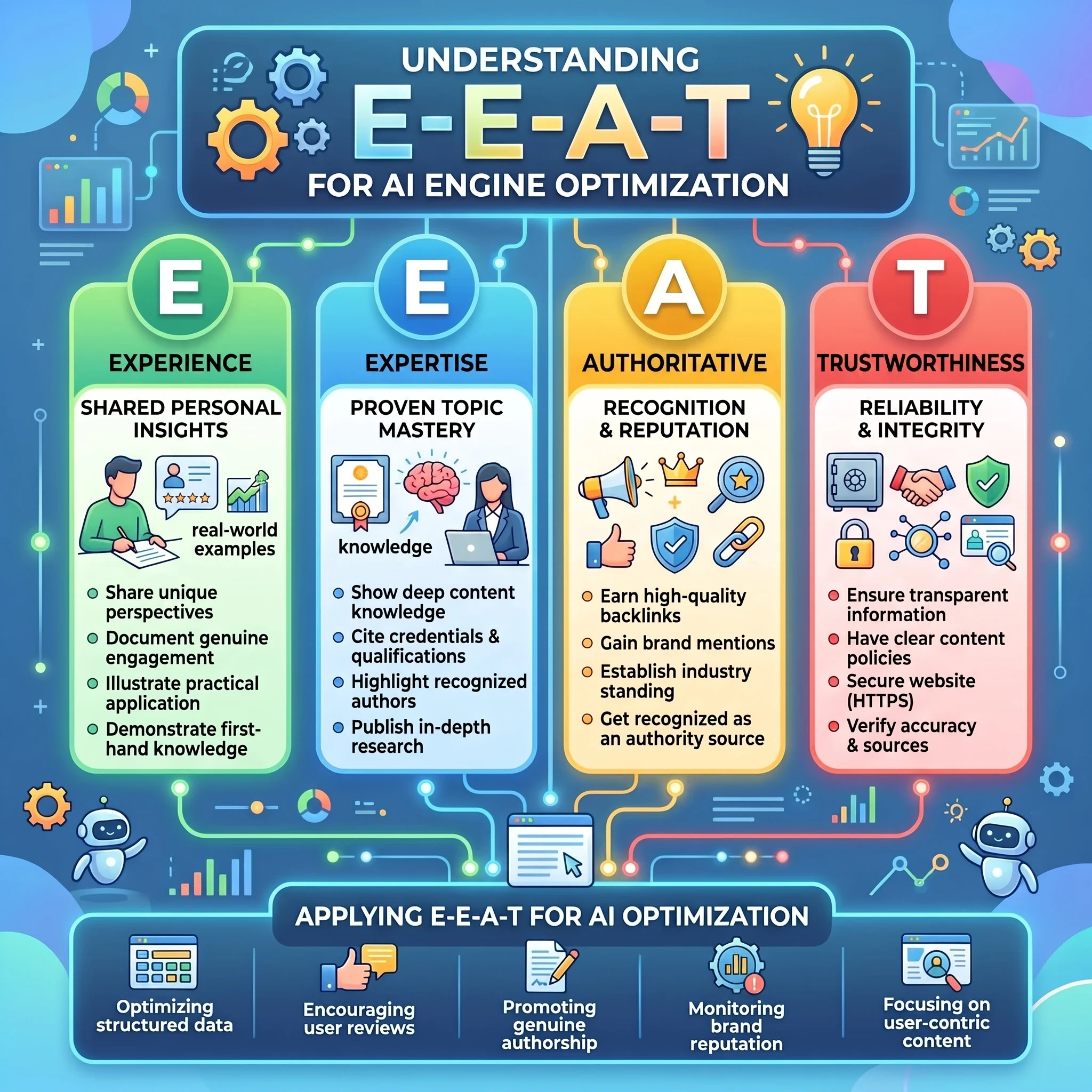
When writing, we should highlight our personal insights, share case studies, and make applicable credentials clear. For example, if I talk about optimizing a blog post for AI, I explain steps to take and share any results.
This helps to stand out from generic content that AI scrapers might otherwise overlook.
Why E-E-A-T Is Really Important
- Experience: Personal stories or firsthand knowledge connect with both users and AI models. I focus on real situations I’ve faced during AI optimization.
- Expertise: Sharing industry trends or lessons I’ve learned from experimenting with different strategies shows that I understand the subject well.
- Authoritativeness: Linking out to trusted sources, mentioning relevant courses, or noting milestones gives a sense of authority on the page.
- Trustworthiness: I explain my process honestly and provide transparent results, which helps both readers and AI see the value of my input.
Building your reputation for E-E-A-T builds momentum over time. For those starting out, consider adding a short author bio with your experience or linking to other thought leader content for extra credibility points.
Simple Steps to Get Started with AI Engine Optimization
Optimizing for AI engines doesn’t need to be overwhelming. Here is how I usually get started:
Ready to put this into action?
Start your free journey today — no credit card required.
- Target Real Questions: I start by making a list of real questions people ask, using communities like Reddit or Quora, or tools such as Google’s People Also Ask.
- Write for Clarity: I answer the main question right under a heading. I keep my language direct and easy for both people and machines to grasp.
- Add Relevant Details: I include recent facts, statistics, or simple tables to provide context and depth for the AI parser.
- Update Regularly: AI engines value fresh information, so I revisit important posts and update them with new trends or results from my experience, as JAY teaches in his live webinars.
- Look at What AI Responds With: I often ask AI tools my main keyword questions to see what answers they provide. If my site isn’t among the cited sources, I look for ways to make my content even more clear and trustworthy.
Monitoring AI-generated answers has become a crucial part of content creation workflow. Tools like Perplexity can reveal which sites get cited and how responses get constructed, offering hints on where my content might fall short or need improvement.
By tweaking introductory sections and making sure headings match common search phrasing, we may improve content's AI visibility.
Common Challenges in AI Engine Optimization (And How I Handle Them)
AI optimization comes with its own set of hurdles. Here are some issues I face and how I tackle them:
- Ambiguous Queries: People often phrase questions in unexpected ways. I brainstorm different ways a question might be asked and cover variations in my content. Kyle has also said to utilize peoplealsoask.com
- AI Misinterpreting Content: Sometimes, AI engines take information out of context. To stop this, I write short, standalone answers before giving extra background or detail.
- Lack of Unique Value: If the AI cites only big sites, I focus more on sharing personal insights, niche data, or original ideas that aren’t found elsewhere.
- Stale Content: I schedule regular reviews of key posts to add updates and new stats whenever possible.
- Hallucinations: Sometimes the AI results will be way out of whack, and we can also try starting over with the question or prompt paraphrased.
Dealing with Ambiguous Queries
When users ask questions in ways I didn’t expect, my post could be missed. To solve this, I browse forums and question sites to see what language real people use.
I try to work these phrases directly into my headings or sections for visibility. Restating common questions and synonyms is a helpful habit to get into.
AI Taking Things Out of Context
AI models extract chunks of text to build answers, which can cause confusion if I bury answers in long paragraphs. So, I state my core advice in its own sentence, followed by details or examples. This habit protects against misinterpretation and makes your core advice easier to quote by AI.
Advanced Tips for Boosting AI Citations
I’ve experimented with several tactics to improve the chances of being cited by AI answers or overview features. These are techniques that work well for me:
- Use Schema Markup: Adding FAQ, HowTo, or Article schema to my pages helps AI engines recognize my content’s structure.
- Publish Data Visualizations: AI loves sharing simple charts, tables, or lists. I create visual resources that summarize my main points clearly.
- Build Out Topical Hubs: When I cover related subtopics on my site and interlink them, AI engines are more likely to treat my coverage as allinone.
- Encourage Mentions and Links: I answer questions or share my posts in online forums, boosting my site’s profile and making it more likely for AI to source me.
Why Schema and Structured Data Help
Structured data acts like a label for each part of my page, telling AI engines exactly where to find answers to specific questions. This can give my site a real boost in both classic search results and AI summaries. If you haven’t tried structured markups yet, I highly recommend experimenting with plugins or online tools to generate them for your site.
Keeping plugins to a minimum can help your site speed, so be judicial.
Building Authority Across Other Platforms
My presence across different platforms plays a real role in AI engine optimization. If I answer questions on Reddit, Quora, or share tips on social feeds, these actions raise my authority. AI engines notice when a name, brand, or URL pops up on respected thirdparty sites.
Sometimes, I share insights or case studies from my blog on these channels and include references back, which increases the chances that AI engines see my site as a verified source.
Expanding your visibility doesn’t only attract more human readers, it also sends trust signals to AI. I’ve found that simple actions, like participating in industry groups or joining in on expert Q&As, can have a positive ripple effect on how your brand is perceived.
Real-World Impact: My Experience with AI Engine Optimization
I remember a time my post about trend forecasting in ecommerce was picked up as a source by a popular AI tool.
After structuring the post for directness, including my personal growth tips, and linking to new data, I saw a measurable uptick in traffic from people who clicked the AI’s cited link.
This showed me how important it is to speak from experience, provide value, and keep content updated for AI visibility.
- Direct Answers: I saw more citations when I summarized in the first sentence after a question heading.
- Consistent Updates: Refreshing stats or trends kept my content relevant, making it more likely to rank in AI-driven answers.
- Community Engagement: Sharing simple tips on forums drew new audiences and more mentions, leading to better AI trust signals.
Frequently Asked Questions about AI Engine Optimization
I get a lot of questions from others wanting to optimize for AI engines. Here are a few common ones I hear:
Question: How is AI engine optimization different from classic SEO?
Answer: With SEO, the focus is mainly on ranking a link in the list of Google results. AI engine optimization is about making sure content is ready for AI models to find, understand, and cite it whenever users ask for help or for trusted overviews.
Question: What is GEO (Generative Engine Optimization)?
Answer: GEO targets how AI language models extract and present answers. The aim is to be the preferred source in AI-generated overviews, summaries, or citations, not just to land top search engine rankings.
Question: How often should I update my content?
Answer: Updating is really important for staying visible in both classic and AI-driven results. I try to review and refresh key posts at least every 3 to 6 months or shortly after new trends or data emerge in my niche.
Moving Forward with AI Engine Optimization
Getting my content noticed by AI engines is now almost as important as classic search engine optimization.
By focusing on clear organization, providing valuable insights, and building authority beyond my own site, I help make sure my voice gets found and trusted by both AI and readers.
If you’re just starting out, following these simple guidelines gets you ahead as more searchers turn to AI for everyday answers.
A quick side note to the person who wrote on my profile for me not to make trainings, I can't understand why I shouldn't or if this was a sort of joke.
Wealthy Affiliate, Please Help me prove them wrong with likes!
Share this insight
This conversation is happening inside the community.
Join free to continue it.The Internet Changed. Now It Is Time to Build Differently.
If this article resonated, the next step is learning how to apply it. Inside Wealthy Affiliate, we break this down into practical steps you can use to build a real online business.
No credit card. Instant access.